· Dr. Chen Wei · Engineering · 5 min read
IPC Standards for PCB
Learn about IPC standards for PCB quality — IPC-A-600, IPC-6012, and the three performance classes. Understand acceptance criteria for annular ring, hole quality, conductor width, and more.

Quick Answer
IPC defines three PCB performance classes: Class 1 (general electronics), Class 2 (dedicated service electronics like telecom), and Class 3 (high-reliability electronics like medical, military, aerospace). Each class has progressively stricter requirements for annular ring, hole quality, conductor width, and other parameters defined in IPC-6012 and IPC-A-600.
IPC (Association Connecting Electronics Industries) standards define the quality and reliability requirements for PCB fabrication and assembly. Understanding these standards — especially the three performance classes — is essential for specifying the right quality level for your product.
Key IPC Standards for PCBs
IPC-6012: Qualification and Performance Specification for Rigid PCBs
The primary specification defining requirements for rigid PCB fabrication quality. Covers:
- Materials and construction
- Dimensional tolerances
- Plating quality (copper, surface finish)
- Electrical performance
- Environmental resistance
- Cleanliness requirements
IPC-A-600: Acceptability of Printed Boards
A visual reference standard with photographs showing acceptable and defective conditions. Used by inspectors to determine if boards pass or fail. Covers:
- Surface conditions
- Plating quality
- Laminate defects
- Solder mask quality
- Marking quality
IPC-2221: Generic Standard on Printed Board Design
Design rules including trace width, spacing, hole sizing, and environmental considerations.
IPC-A-610: Acceptability of Electronic Assemblies
The assembled board equivalent of IPC-A-600 — defines solder joint quality criteria.
The Three Performance Classes
IPC defines three classes of increasing quality and reliability. The class determines acceptance criteria throughout fabrication and assembly.
Class 1: General Electronic Products
- Definition: Products where the primary requirement is function of the completed assembly
- Reliability requirement: Adequate for applications where cosmetic imperfections are acceptable
- Typical products: Consumer electronics, toys, non-critical LED lighting, basic IoT devices
- Cost impact: Lowest manufacturing cost
Class 2: Dedicated Service Electronic Products
- Definition: Products where continued performance and extended life is required, and for which uninterrupted service is desired but not critical
- Reliability requirement: Higher than Class 1; cosmetic defects are limited
- Typical products: Industrial equipment, telecommunications, commercial computers, automotive non-safety, medical non-life-supporting
- Cost impact: 5-15% premium over Class 1 (the industry default)
Class 3: High-Performance/Harsh Environment Electronic Products
- Definition: Products where continued high performance or performance-on-demand is critical, equipment downtime cannot be tolerated, and the end-use environment may be exceptionally harsh
- Reliability requirement: Highest — strict acceptance criteria for all parameters
- Typical products: Military/defense, aerospace avionics, life-support medical, automotive safety-critical (ADAS, airbag), satellite systems
- Cost impact: 15-40% premium over Class 2
Key Acceptance Criteria by Class
Annular Ring
| Condition | Class 1 | Class 2 | Class 3 |
|---|---|---|---|
| External layers (min) | 0 mil (tangent OK) | 2 mil (0.05mm) | 5 mil (0.127mm) |
| Internal layers (min) | 0 mil | 1 mil (0.025mm) | 2 mil (0.05mm) |
| Breakout allowed? | Yes (90° max) | Yes (90° max) | No breakout |
Conductor (Trace) Width Reduction
| Condition | Class 1 | Class 2 | Class 3 |
|---|---|---|---|
| Max width reduction | 30% | 20% | 10% |
| Min conductor spacing | Per design | Per design | Per design (stricter tolerance) |
Hole Wall Plating
| Parameter | Class 1 | Class 2 | Class 3 |
|---|---|---|---|
| Min copper thickness | 20um | 20um | 25um |
| Voids in plating | Up to 10% of wall | Up to 5% | No voids allowed |
| Etchback/wicking | Minor allowed | Minor allowed | Not allowed |
Solder Mask
| Condition | Class 1 | Class 2 | Class 3 |
|---|---|---|---|
| Misregistration | 50% of pad exposed | Pad fully exposed | Pad fully exposed + margin |
| Bubbles/pinholes | Acceptable if small | Limited size/quantity | Not acceptable |
| Coverage over traces | May have minor voids | Complete coverage | Complete, uniform coverage |
Board Flatness (Bow and Twist)
| Condition | Class 1 | Class 2 | Class 3 |
|---|---|---|---|
| Maximum bow/twist | 1.5% | 1.0% | 0.75% |
| For SMT assembly | 0.75% | 0.75% | 0.5% |
How to Specify IPC Class
In Your Design Package
Include the IPC class on:
- Fabrication drawing: “Fabricate to IPC-6012 Class 2” (or Class 3)
- Assembly drawing: “Assemble to IPC-A-610 Class 2”
- Purchase order: Specify class in the order description
Default Behavior
- Most PCB manufacturers default to Class 2 if not specified
- Some low-cost manufacturers may only achieve Class 1
- Class 3 must always be explicitly specified and confirmed by the manufacturer
Class 3 Special Requirements
Class 3 boards have additional requirements beyond tighter tolerances:
- Material traceability: Lot tracking for all raw materials (laminate, copper, chemicals)
- Process documentation: Detailed records of all manufacturing parameters
- Cross-section analysis: Microsection testing of plating quality (per lot or per panel)
- Thermal stress testing: Solder float test (288°C for 10 seconds) to verify plating adhesion
- Coupon testing: Dedicated test coupons on every panel for destructive testing
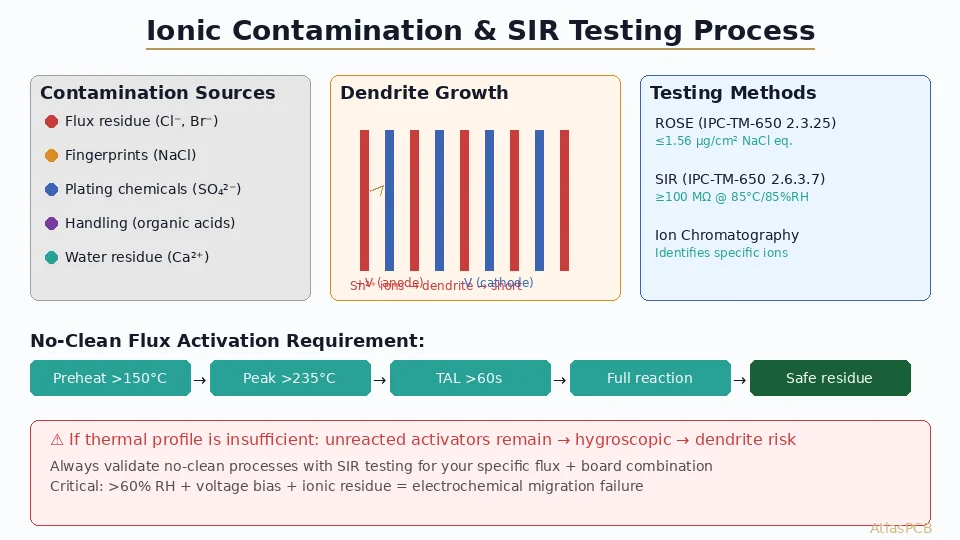
- Cleanliness testing: Ionic contamination measurement (ROSE test or ion chromatography)
- Certificate of Conformance: Manufacturer certifies each lot meets Class 3 requirements
IPC-6012 Slash Sheets
IPC-6012 has specialized versions for specific industries:
- IPC-6012DA: Automotive addendum — additional requirements for automotive electronics
- IPC-6012DS: Space and military addendum — most stringent requirements
- IPC-6012DM: Medical addendum — requirements for medical device PCBs
- IPC-6012E: Current base revision (as of 2024)
Practical Guidelines
When to Specify Class 2 (Default)
- Commercial and industrial products
- Consumer electronics with quality expectations
- Telecom equipment
- Non-safety automotive
- Most IoT and connected devices
When to Specify Class 3
- Human safety depends on the product (medical life support, automotive ADAS)
- Failure is extremely costly (satellite, deep-sea, nuclear)
- Extended service life required (20+ years)
- Harsh environment (extreme temperature, vibration, humidity)
- Military/defense applications
When Class 1 Is Acceptable
- Disposable or short-life products
- Very cost-sensitive consumer goods
- Prototype and development boards
- Non-critical LED lighting
Conclusion
IPC standards provide a common language between designers, manufacturers, and inspectors for PCB quality. Class 2 is the default for most commercial products and provides a good balance of quality and cost. Specify Class 3 only when reliability is truly critical — the additional testing and documentation add significant cost. Always confirm your manufacturer’s IPC certification and capability level before placing orders for Class 3 boards.
Further Reading
[PCB Surface Finish Guide: HASL, ENIG, OSP and More Compared]/blog/pcb-surface-finish-guide/)
[PCB Solder Mask: Types, Colors, and Functions Explained]/blog/pcb-solder-mask-guide/)
[HDI PCB Design Guide: Stackup Rules, Via Structures & DFM Checklist]/blog/hdi-pcb-design-guide/)
[ENEPIG vs ENIG: Which PCB Surface Finish for Your Design?]/blog/enepig-vs-enig/)
About AtlasPCB — We specialize in complex PCB manufacturing for HDI, RF, and high-reliability applications. Explore our full PCB manufacturing capabilities . Every order includes free engineering review. Get your quote.
Reviewed by AtlasPCB Engineering Team — IPC-certified manufacturing specialists with 15+ years of production experience in HDI, RF, and high-reliability PCB fabrication. Content based on factory floor data and real customer design reviews.
Frequently Asked Questions
What is IPC Class 3 PCB?
What is the difference between IPC Class 2 and Class 3?
Which IPC class should I specify?
- IPC standards
- quality standards
- pcb classification
- reliability