· Thomas Webb · News · 4 min read
PCB East 2026 Highlights
PCB East 2026 drew 48% more attendees as the industry confronts AI-driven demand for advanced laminates, HDI fabrication capacity, and smart manufacturing — key takeaways for hardware engineers.
PCB East 2026 Draws Record Attendance as AI Reshapes Industry
PCB East 2026, held in May at the Marlborough, Massachusetts convention center, saw attendance surge 48% year-over-year — reflecting the growing urgency surrounding AI infrastructure’s impact on PCB technology, materials supply chains, and manufacturing capability.
The conference brought together PCB designers, fabricators, OEMs, materials suppliers, and EMS leaders to address engineering challenges created by increasing system complexity and higher power densities driven by AI computing infrastructure. Multiple speakers characterized this moment as the most significant inflection point for the PCB industry since the original internet boom of the late 1990s.
AI’s Impact on the PCB Ecosystem
The dominant theme was unmistakable: artificial intelligence is not merely a customer vertical — it is fundamentally restructuring PCB demand patterns, material requirements, and manufacturing capabilities.
Manufacturing Automation Through AI
Sean Patterson’s presentation demonstrated how AI implementation in PCB manufacturing is “less about software and more about leadership, workforce transformation, and operational integration.” He showed AI beginning to reshape engineering collaboration, procurement, quoting, and decision-making throughout the ecosystem.
Timon Ruban expanded on this by presenting AI-driven collaboration platforms now accessible to smaller EMS companies, improving supply chain visibility and communication between engineering and manufacturing teams.
Machine-Readable Data as AI Foundation
Hemant Shah and Dana Korf discussed IPC-2581 and intelligent machine-readable manufacturing data as “the foundation for future AI-driven automation, predictive analytics, digital twins, and smart factory environments.” Their message was clear: factories without structured digital data pipelines will be unable to leverage AI manufacturing tools.
Materials Supply Chain Under Pressure
Kurt Whitcomb delivered one of the conference’s most impactful presentations on how hyperscale AI server deployments are creating “unprecedented demand” for:
- HDI fabrication capacity
- Advanced low-loss laminates (Megtron 6/7, Isola Astra MT77)
- Ultra-thin copper foils (12µm and below)
- Specialty substrates for advanced packaging
His data showed AI accelerator architectures increasing demand for higher-layer-count PCBs (20+ layers), finer geometries (50/50µm line/space), advanced thermal structures, and ultra-low-loss materials — leading to longer lead times, material allocations, and pricing volatility.
Historical Parallel Warning
Alun Morgan compared today’s AI-driven manufacturing shift to the supply chain realignment during the original internet boom, warning that “prioritizing AI infrastructure could have long-term consequences for PCB fabricators and OEMs serving broader electronics markets.” His concern: as fabricators retool for high-margin AI boards, standard commercial and industrial customers may face capacity squeezes.
Core Technical Topics
Beyond AI, the conference reinforced that fundamental signal integrity engineering remains critical:
- Rick Hartley delivered sessions on grounding strategy, return current behavior, and electromagnetic field containment using physics-based approaches
- Via behavior sessions explored how improper via implementation creates impedance discontinuities, radiated emissions, and degraded signal integrity during layer transitions
- High-speed routing presentations addressed PCIe Gen6, 224G SerDes, and DDR5 design challenges
What This Means for Hardware Engineers
The PCB East 2026 message to design engineers is clear:
- Plan for longer lead times on advanced materials — 16-20 week lead times for ultra-low-loss laminates are becoming normal
- Design for manufacturability at the schematic stage — DFM issues caught late are exponentially more expensive
- Invest in HDI capability — via-in-pad, sequential lamination, and ELIC structures are moving from premium to mainstream
- Embrace digital data handoff — IPC-2581, ODB++, and structured manufacturing data will determine factory efficiency
The attendance surge signals that the PCB industry is entering its most significant transformation in decades, driven by AI demand that touches every aspect of design, materials, and manufacturing.
Advanced Packaging and PCB Convergence
Multiple presentations addressed the convergence of semiconductor packaging and PCB technology — a trend that blurs the traditional boundary between substrate and board:
- Chiplet architectures requiring heterogeneous integration on organic substrates
- 2.5D/3D packaging demands that push PCB fabrication techniques to semiconductor-like precision
- Embedded component technology integrating passives and even active devices within PCB layers
- Ultra-fine line resolution (sub-25µm) becoming necessary for I/O-intensive packages
Speakers noted that PCB fabricators must choose: invest in advanced capability to serve the AI/HPC market, or accept a commodity role serving lower-complexity applications at compressed margins.
Sustainability and Regulation
Beyond AI, the conference addressed growing regulatory pressure:
- EU PFAS restrictions affecting solder mask and surface finish chemistry
- REACH compliance driving material substitution across the supply chain
- Carbon reporting requirements pushing fabricators toward renewable energy
- Water usage reduction mandates in regions facing scarcity
The consensus: sustainability compliance will become a procurement qualifier, not just a nice-to-have, within 18-24 months for tier-1 OEMs.
Source: iConnect007 PCB East 2026 Coverage
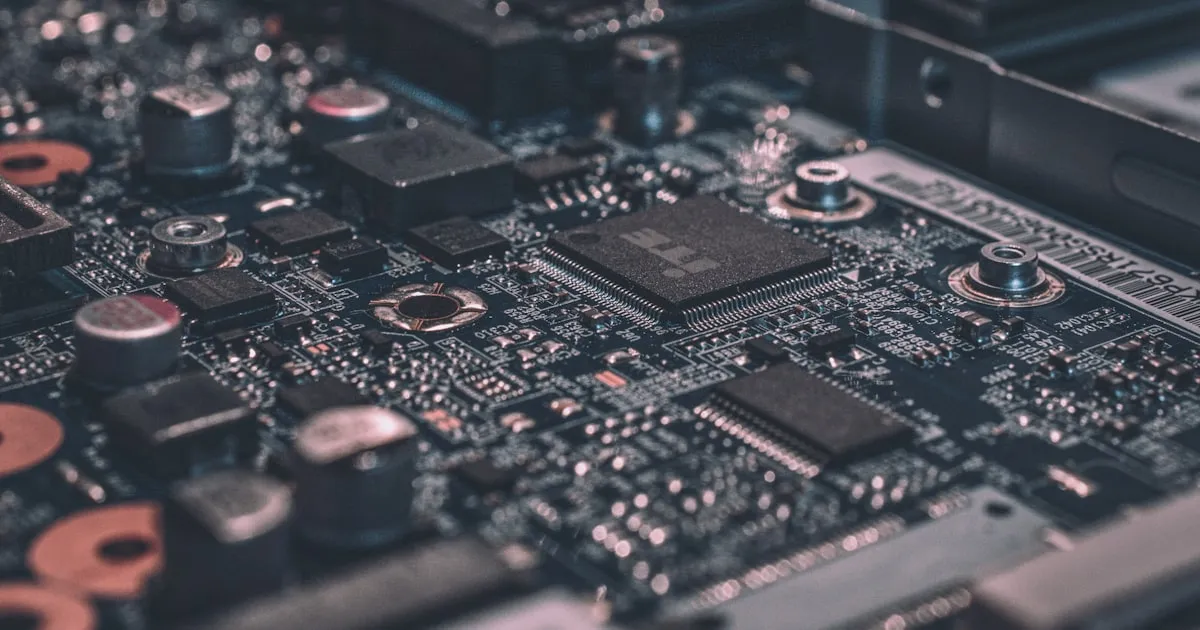
Image: Alexandre Debiève via Unsplash
Related: AtlasPCB provides advanced HDI fabrication with sequential lamination up to 3+N+3 build-ups, ultra-low-loss material processing, and controlled impedance for high-speed designs. Explore our capabilities →
About AtlasPCB — We specialize in complex PCB manufacturing for HDI, RF, and high-reliability applications. Explore our HDI PCB manufacturing capabilities, or get an impedance-controlled PCB manufacturing . Every order includes free engineering review. Get your quote.
Reviewed by AtlasPCB Engineering Team — IPC-certified manufacturing specialists with 15+ years of production experience in HDI, RF, and high-reliability PCB fabrication. Content based on factory floor data and real customer design reviews.
- news
- PCB East 2026
- AI infrastructure
- HDI
- pcb materials
- smart manufacturing
- conference
- signal integrity
- supply chain