· Thomas Webb · News · 4 min read
Nan Ya PCB Accelerates AI Substrate Capacity as Advanced Packaging Demand Surges
Taiwan's Nan Ya PCB announces capacity expansion for high-end IC substrates targeting AI GPU and HPC applications, driven by NVIDIA and AMD advanced packaging orders that have pushed lead times beyond 16 weeks.

Nan Ya PCB Targets High-End IC Substrate Growth
Taiwanese IC substrate manufacturer Nan Ya PCB is ramping capacity for advanced AI chip substrates, according to Digitimes reports from May 15-18, 2026. The expansion targets high-performance GPU, switch, and edge AI device packaging — sectors where demand has outpaced supply since the AI infrastructure buildout accelerated in late 2025.
Nan Ya PCB’s push into advanced IC substrates could influence global AI hardware supply chains by increasing capacity for high-performance GPUs, switches, and edge AI devices. The company’s expansion reflects the broader industry trend where AI-related demand is pulling substrate manufacturers into increasingly complex product tiers.
Market Drivers: AI Accelerator Substrate Demand
The demand surge stems from multiple converging factors:
GPU and AI accelerator packaging:
- NVIDIA H200/B100 and next-generation Rubin architectures require substrates with 12+ build-up layers
- AMD MI350/MI400 competing for the same advanced substrate capacity
- Each AI GPU package consumes 5-10× more substrate area than a standard server CPU
HBM (High Bandwidth Memory) interposers:
- HBM4 stacks require ultra-fine-pitch substrate connections
- Memory-on-package designs increasing substrate complexity
- Each HBM stack needs its own substrate area adjacent to the processor die
Networking ASICs:
- 800G and 1.6T switch chips driving substrate demand from Broadcom, Marvell
- Optical transceiver substrates for co-packaged optics
- High-speed SerDes (224G PAM4) pushing substrate material requirements to ultra-low-loss
Capacity and Timeline
While Digitimes reporting doesn’t specify exact capacity figures, industry context suggests:
- Current constraint: Lead times for advanced IC substrates have extended to 16-20 weeks for AI-class products
- Industry CapEx: Taiwan’s substrate makers collectively invested >$3 billion in 2025-2026 expansion
- Nan Ya PCB positioning: Company leveraging its parent group’s (Formosa Plastics) material supply chain integration for competitive cost structure
- Target availability: New capacity expected to come online in phases through H2 2026 and H1 2027
Concurrently, Zhen Ding Technology (ZDT) reported in its April 2026 results that server and optical communication revenue surged more than 230% year-over-year — underscoring the magnitude of AI-driven demand flowing through Taiwan’s substrate supply chain.
Broader Supply Chain Context
The substrate expansion sits within a larger AI hardware demand picture:
- ABF substrate market: Projected at $7.19 billion in 2026 (up from $5.2B in 2024)
- Substrate-like PCB: $4.24 billion market growing at 18% CAGR
- CCL (Copper Clad Laminate) tightness: AMI capacity sold out through 2028 as CCL makers race for high-end tools
- Material allocation: AI server-grade laminates on 6-8 week allocation across most suppliers
The Digitimes separately reported that Tripod Technology posted its strongest-ever first quarter in 2026, driven by resilient server and memory substrate demand from Apple and AI server customers — further evidence that the capacity expansion cycle has room to run.
Implications for PCB Designers and Hardware Teams
For engineers designing AI hardware systems, the substrate capacity dynamics have practical consequences:
- Plan substrate procurement early: 16-20 week lead times mean substrate must be ordered during schematic design, not after layout completion
- Material second-sourcing: Taiwan’s PCB supply chain is actively qualifying second-source materials to reduce single-supplier risk
- Design for available processes: Work with substrate vendors to understand what geometries and layer counts their new capacity supports
- Consider total solution cost: A higher-capability substrate may enable a simpler PCB motherboard design, optimizing total system cost
AtlasPCB’s Role in the AI Hardware Ecosystem
While IC substrates represent a specialized manufacturing segment, AtlasPCB serves the complementary PCB needs of AI hardware systems:
- Server motherboards: 20-30 layer boards with controlled impedance for 112G SerDes interfacing with AI accelerator packages
- Backplane and midplane: High-layer-count interconnects between server blades in AI clusters
- Power distribution boards: Heavy-copper designs delivering hundreds of amps to GPU modules
- Test and validation boards: Engineering samples for AI chip bring-up and characterization
The substrate manufacturers make the package; we make the boards those packages mount to. Both tiers must scale together to avoid bottlenecks in AI hardware production. Our HDI stackup expertise and capabilities in high-layer-count controlled impedance design make us a natural partner for companies building the server platforms that house these advanced AI packages.
Sources: Digitimes (May 15 & May 18, 2026), Zhen Ding Technology Q1 2026 earnings report
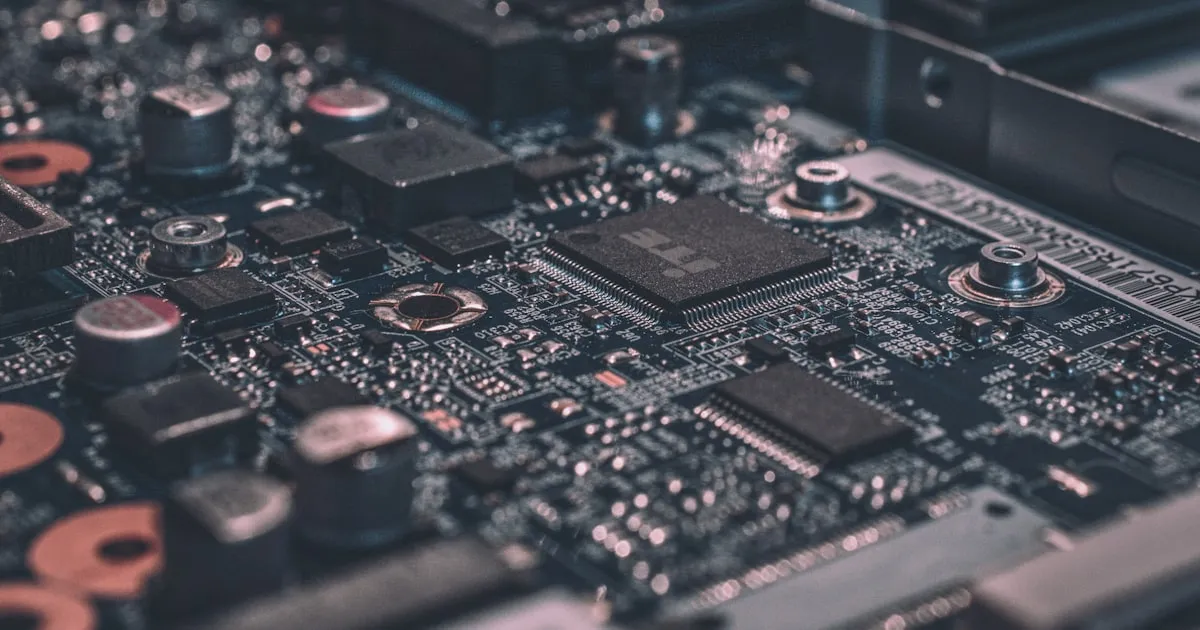
Image: Vishnu Mohanan via Unsplash
Building PCBs for AI server platforms? Get a quote on your high-layer-count server motherboard or interconnect design. AtlasPCB supports the advanced material and impedance requirements that AI hardware demands.
About AtlasPCB — We specialize in complex PCB manufacturing for HDI, RF, and high-reliability applications. Explore our full PCB manufacturing capabilities, or get an instant online quote . Every order includes free engineering review. Get your quote.
Reviewed by AtlasPCB Engineering Team — IPC-certified manufacturing specialists with 15+ years of production experience in HDI, RF, and high-reliability PCB fabrication. Content based on factory floor data and real customer design reviews.
- news
- nan-ya-pcb
- ai-substrate
- advanced-packaging
- taiwan
- ic-substrate