· AtlasPCB Engineering Team · News · 6 min read
Data Center PCB Demand Surges as 16+ Layer Boards
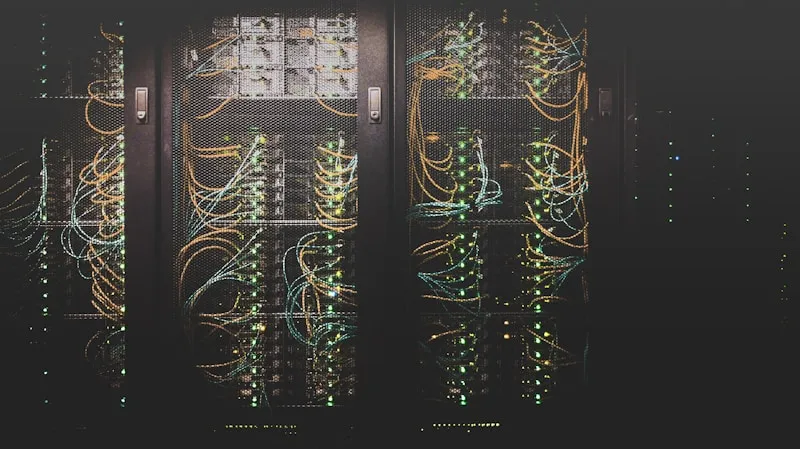
AI-driven data center construction is creating unprecedented demand for high-layer-count PCBs. Lead times for 16+ layer boards have extended significantly in Q2 2026, with GPU server and network switch platforms driving the supply squeeze.
Quick Answer
In Q2 2026, demand for 16+ layer high-speed PCBs used in AI data center infrastructure has surged approximately 35–40% year-over-year, creating significant supply constraints. GPU server motherboards (typically 16–24 layers with high-speed materials like Megtron 6/7), 800G network switch boards (20–28 layers), and AI accelerator baseboard designs are driving the demand spike. Lead times for complex multilayer boards have extended from 4–5 weeks to 7–10 weeks at major fabricators, with premium expedite fees increasing 20–30%.
Data Center PCB Demand Surges as 16+ Layer Boards Face Supply Crunch in Q2 2026
The artificial intelligence infrastructure buildout is creating a bottleneck that most people outside the electronics supply chain don’t see: a severe shortage of high-layer-count printed circuit boards.
As hyperscale cloud providers race to deploy next-generation AI training and inference clusters, the demand for the complex, high-performance PCBs that underpin these systems has outstripped available fabrication capacity. In Q2 2026, 16+ layer boards with high-speed materials are facing lead time extensions of 50–100% compared to a year ago, with no immediate relief in sight.
The Numbers Behind the Squeeze
Industry data paints a stark picture:
- Year-over-year demand growth for 16+ layer PCBs in data center applications has reached 35–40% — far outpacing overall PCB market growth of approximately 6–8%
- Lead times for complex multilayer boards (16–28 layers) at major Asian fabricators have extended from a typical 4–5 weeks to 7–10 weeks, with some highly complex designs pushing past 12 weeks
- Premium expedite surcharges have increased 20–30% since Q4 2025, reflecting the scarcity of available production slots
- High-speed laminate materials — particularly Megtron 6, Megtron 7, and Tachyon — are themselves facing allocation, with lead times of 6–8 weeks for some grades
The demand is being driven by three primary application platforms, each with increasingly demanding PCB requirements.
GPU Server Motherboards
The current generation of AI GPU servers uses motherboards that are among the most complex PCBs in volume production:
- Layer count: 16–24 layers, with some reference designs reaching 26 layers
- Materials: Low-loss laminates with Df ≤ 0.004 at 10 GHz (Megtron 6/7 class) for the signal layers, with standard FR-4 or mid-range materials for power distribution layers — a hybrid stackup approach that balances performance and cost
- Signal integrity requirements: Controlled impedance to ±5%, with differential pairs routed at 85–100Ω for PCIe 6.0 and NVLink interfaces operating at 112 Gbps PAM4
- Via technology: Multiple stages of sequential lamination with buried vias, blind microvias, and back-drilling of through-hole vias to remove stubs that degrade high-frequency signal quality
- Board dimensions: Large format — some server motherboards exceed 400mm × 600mm, requiring specialized fabrication panel sizes
Each AI server rack may contain 8–16 of these motherboards, and hyperscalers are deploying hundreds of thousands of servers per year. The arithmetic is straightforward: millions of high-layer-count boards annually, concentrated at a small number of fabricators with the capability to produce them.
800G Network Switch Platforms
The networking infrastructure connecting AI clusters is undergoing its own generational shift:
- 800G Ethernet switches are entering volume deployment in 2026, requiring switch boards with 20–28 layers to accommodate the massive pin counts of 51.2 Tbps switch ASICs
- Backplane and midplane boards for modular switch chassis can exceed 30 layers with controlled-impedance stripline routing across the full board
- Material requirements are comparable to GPU server boards, with additional emphasis on uniform dielectric thickness across large panel areas to maintain timing skew budgets on high-speed serial links
AI Accelerator Baseboards
Beyond GPU servers, custom AI accelerator platforms — including TPUs, proprietary training chips, and inference accelerators — use specialized baseboard designs that push PCB technology to its limits:
- Ultra-fine trace/space (3/3 mil or below) for high-density breakout from large BGA packages with 2,500+ pins
- Embedded capacitance layers to provide power delivery filtering at the package boundary
- Mixed-material stackups combining ultra-low-loss signal layers with high-Dk power distribution layers in a single board
These designs are technically demanding and consume disproportionate fabrication capacity due to lower yields and longer processing times.
Why Supply Can’t Keep Up
The [high-layer-count PCB manufacturing]/blog/high-layer-count-pcb-challenges/) bottleneck is structural, not just cyclical:
1. Capital intensity: Building a production line capable of reliably fabricating 20+ layer boards with sequential lamination requires $50–100 million in equipment investment — including high-precision laser drills, sequential lamination presses, advanced AOI systems, and impedance testing infrastructure. This creates high barriers to entry.
2. Yield challenges: As layer count increases, cumulative yield loss compounds. A process with 99.5% yield per layer still produces only ~88% yield at 24 layers before any complex via structures are considered. Managing this requires deep process expertise accumulated over years.
3. Material allocation: The surge in demand for high-speed laminates has created a secondary bottleneck. Laminate manufacturers are allocating materials to their largest customers, leaving smaller fabricators scrambling for supply.
4. Workforce specialization: Operating a high-layer-count line requires experienced process engineers and technicians. This talent pool is limited, and training takes years rather than months.
What Engineers and Procurement Teams Should Do
With the supply-demand imbalance expected to persist through at least Q3 2026, proactive management is essential:
Start early: If your design requires 16+ layers with high-speed materials, begin engaging fabricators during schematic design — not after layout completion. Providing a preliminary stackup and estimated panel quantity 8–12 weeks before Gerber release can help secure production slots.
Design for manufacturability: Work with your [multilayer PCB manufacturer]/blog/multilayer-fr4-pcb-manufacturer/) during the early design phase. Sometimes a careful redesign of the stackup — adding ground planes differently, optimizing via structures, or adjusting impedance targets — can reduce the layer count by 2–4 layers without degrading electrical performance. In the current market, this can mean the difference between a 5-week and a 10-week lead time.
Secure material commitments: For high-volume programs, ask your fabricator to pre-order laminate materials. Some manufacturers will reserve material allocation for committed orders with purchase orders or letters of intent.
Maintain qualified alternatives: Having at least two qualified sources for critical high-layer-count boards is no longer a luxury — it’s a supply chain necessity. Begin qualification of a second source now if you haven’t already.
The Outlook
Industry capacity for high-layer-count boards is expanding, but new lines take 18–24 months to commission and qualify. Several major fabricators have announced expansion plans:
- Additional sequential lamination capacity coming online in China and Southeast Asia throughout 2026–2027
- New high-speed material production lines from laminate suppliers expected to ease material allocation by early 2027
- Continued investment in automation to improve throughput on existing high-layer-count lines
Until this capacity comes online, the supply-demand gap for 16+ layer data center PCBs will remain tight. Engineering teams that plan ahead, optimize designs for manufacturability, and maintain strong fabricator relationships will navigate this period with the least disruption.
The AI infrastructure build-out is a multi-year cycle. The PCB supply chain is adapting — but in the near term, demand is simply growing faster than capacity can follow.
AtlasPCB Engineering specializes in high-layer-count PCBs for data center and AI hardware applications. Request a quote to discuss your high-speed board requirements and current lead time availability.
About AtlasPCB — We specialize in complex PCB manufacturing for HDI, RF, and high-reliability applications. Explore our full PCB manufacturing capabilities, or get an instant online quote . Every order includes free engineering review. Get your quote.
Reviewed by AtlasPCB Engineering Team — IPC-certified manufacturing specialists with 15+ years of production experience in HDI, RF, and high-reliability PCB fabrication. Content based on factory floor data and real customer design reviews.
Frequently Asked Questions
Why are 16+ layer PCBs in short supply for data centers?
What PCB specifications do AI GPU servers typically require?
How can engineers mitigate long lead times for high-layer-count PCBs?
- industry-news
- data-center
- high-layer-count
- pcb-demand
- ai-hardware