· Marcus Lin · News · 6 min read
6G Terahertz PCB Materials
New low-loss PCB materials targeting sub-THz frequencies (100-300 GHz) emerge from university and industry labs, laying groundwork for 6G wireless infrastructure boards.

Quick Answer
Research teams at universities and industry labs have demonstrated new PCB substrate materials with dissipation factors (Df) below 0.001 at 100 GHz, a critical threshold for practical sub-terahertz circuit board applications. These materials, based on modified PTFE composites, liquid crystal polymers, and ceramic-filled hydrocarbons, are being developed for 6G wireless infrastructure expected to operate in the 100-300 GHz range beginning around 2030.
The Next Frequency Frontier Demands New PCB Thinking
While the electronics industry is still deploying and optimizing 5G infrastructure at millimeter-wave frequencies (24–71 GHz), research laboratories around the world are already tackling the materials science challenges that will define the next generation of wireless technology. 6G, expected to begin commercial deployment around 2030, will push wireless communications into the sub-terahertz (sub-THz) frequency range — 100 to 300 GHz — where existing PCB materials face fundamental physical limitations.
The challenge is not simply one of degree — making current materials slightly better — but of kind. At sub-THz frequencies, the electromagnetic behavior of PCB substrates changes in ways that require entirely new material systems, design methodologies, and manufacturing approaches. Recent research breakthroughs are beginning to show viable paths forward, and the implications for the PCB industry are profound.
Why Current Materials Fall Short
To understand the challenge, consider how PCB substrate materials perform as frequency increases:
Dielectric Loss Escalation
Every PCB laminate has a dissipation factor (Df) that describes how much electromagnetic energy is absorbed by the dielectric material. At low frequencies (<1 GHz), even standard FR-4 (Df ~0.020) works adequately. As frequency climbs into the millimeter-wave range, the industry has shifted to advanced materials:
| Material Class | Typical Df at 10 GHz | Typical Df at 77 GHz | Projected Df at 150 GHz |
|---|---|---|---|
| Standard FR-4 | 0.020 | 0.025+ | Not viable |
| Mid-loss (e.g., Megtron 4) | 0.005 | 0.008 | 0.015+ |
| Ultra-low-loss (e.g., Megtron 7) | 0.002 | 0.003 | 0.006+ |
| PTFE-based (e.g., Rogers RT/duroid) | 0.001 | 0.0015 | 0.003+ |
| Next-gen 6G target | — | — | <0.001 |
At 150 GHz, even today’s best commercial [RF PCB materials]/blog/rf-pcb-manufacturer/) exhibit losses that would make practical circuit design extremely challenging. A Df of 0.003 at 150 GHz means that a 10mm-long transmission line on a 0.1mm substrate would lose approximately 3–4 dB of signal — an unacceptable loss budget for most system architectures.
Conductor Losses Compound the Problem
At sub-THz frequencies, conductor losses become equally or more significant than dielectric losses. The skin depth of copper at 150 GHz is approximately 0.17µm — less than the surface roughness of standard copper foil. This means that electromagnetic fields interact with surface irregularities, dramatically increasing effective resistance.
Standard electrodeposited (ED) copper foil with Rz roughness of 3–5µm becomes a significant loss contributor at these frequencies. Even the smoothest commercially available copper foils (HVLP, with Rz ~1.5µm) are insufficient. Research is exploring:
- Ultra-smooth rolled copper with Rz <0.5µm
- Thin-film sputtered copper deposition
- Alternative conductors (silver, gold) for critical signal traces
- Surface treatment techniques that reduce effective roughness without compromising adhesion
Dimensional Tolerances Tighten Dramatically
At 150 GHz, a half-wavelength in a typical substrate is approximately 0.5mm. Transmission line widths for 50Ω impedance on a 0.05mm substrate are in the range of 20–40µm. This means:
- Line width tolerance must be controlled to ±2µm or better (compared to ±15µm for typical [multilayer PCB manufacturing]/blog/multilayer-fr4-pcb-manufacturer/))
- Dielectric thickness variation must be within ±2µm across the board
- Registration accuracy between layers must be within ±5µm
These tolerances are beyond the capability of standard PCB fabrication processes and push into the domain of semiconductor-like manufacturing.
Research Breakthroughs in 2026
Several research groups have reported significant advances in sub-THz PCB materials:
Modified PTFE Composites
Researchers have developed a new class of PTFE-based composites incorporating nano-scale ceramic fillers that achieve Df of 0.0008 at 100 GHz while maintaining a dielectric constant (Dk) of 2.2 ± 0.05. The key innovation is a proprietary filler surface treatment that minimizes interfacial polarization losses — the primary mechanism driving Df increase at high frequencies in filled polymer systems.
Critically, these materials can be processed using modified versions of standard [RF laminate manufacturing]/blog/rf-pcb-manufacturer/) techniques, suggesting a feasible path to commercial scale production.
Liquid Crystal Polymer (LCP) Advances
LCP has long been recognized as a promising substrate material for high-frequency applications due to its inherently low moisture absorption (<0.04%) and low Df. New research from Japanese materials laboratories has demonstrated LCP formulations with Df of 0.0006 at 100 GHz — among the lowest values reported for any organic substrate material.
The challenge with LCP has traditionally been processing difficulty — bonding multiple LCP layers together and to copper foil requires precise temperature and pressure control. The new formulations include modified adhesion layers that improve copper peel strength from 3 N/cm to over 6 N/cm without degrading high-frequency performance.
Ceramic-Filled Hydrocarbon Systems
A collaboration between European research institutes and materials companies has produced ceramic-filled hydrocarbon substrates with tailorable Dk (ranging from 3.0 to 10.0) and Df below 0.001 at 100 GHz. The high-Dk versions are particularly interesting for antenna substrate applications, where higher dielectric constants enable physically smaller antenna elements — critical for the dense phased arrays expected in 6G base stations.
Low-Temperature Co-Fired Ceramics (LTCC)
LTCC technology, already used in some millimeter-wave applications, is being adapted for sub-THz frequencies. New tape compositions with optimized glass-ceramic formulations achieve Df of 0.0005 at 100 GHz with excellent dimensional stability. The inherent hermeticity of LTCC also addresses moisture absorption concerns that plague organic substrates at extreme frequencies.
Manufacturing Implications
The transition to sub-THz PCB materials will require significant manufacturing evolution:
Process Equipment
Fabricating PCBs for 6G applications will require:
- Lithography: Direct-write laser imaging with ≤2µm resolution, replacing standard 15–20µm capability LDI systems
- Etching: Semi-additive processes ([mSAP/SAP]/news/news-msap-process-adoption-pcb-industry-2026/)) to achieve 20µm line/space with controlled sidewall profiles
- Copper deposition: Sputtering or electroless/electrolytic processes capable of producing copper films with surface roughness below 0.5µm Rz
- Lamination: Precision vacuum presses with thickness control to ±2µm
- Inspection: Metrology systems capable of measuring feature dimensions at the single-micron level
Testing and Characterization
Measuring PCB material properties at sub-THz frequencies requires specialized equipment that is currently limited to research laboratories:
- Vector network analyzers with frequency coverage to 300 GHz or beyond
- Split-post dielectric resonators adapted for thin-film measurements at 100+ GHz
- Free-space material measurement systems with sub-THz horn antennas
- Time-domain THz spectroscopy for broadband material characterization
Standard industry characterization methods (IPC-TM-650) do not currently cover frequencies above 40 GHz. Developing standardized test methods for sub-THz PCB materials is itself an active area of work within IPC technical committees.
Timeline to Commercialization
The path from laboratory results to production PCBs follows a predictable but extended timeline:
| Milestone | Estimated Timeline |
|---|---|
| Material demonstration at lab scale | 2025–2026 (current) |
| Pilot production of laminates | 2027–2028 |
| Material qualification and datasheets | 2028–2029 |
| Process development at PCB fabricators | 2029–2030 |
| 6G infrastructure prototype boards | 2030–2031 |
| Volume production | 2031–2033 |
The PCB industry has approximately 4–5 years to develop the manufacturing capabilities needed to process these new materials — a timeline that requires investment planning to begin now.
What PCB Engineers Should Do Today
While 6G production PCBs are years away, the foundational work being done today has implications for current design practices:
Build high-frequency design expertise now. Engineers working on [5G millimeter-wave boards]/blog/rf-pcb-manufacturer/) are developing skills that will directly transfer to sub-THz design.
Understand material properties at frequency. Request frequency-dependent Dk/Df data from your laminate supplier up to the highest available measurement frequency. Understanding how your current materials behave at 40–77 GHz provides insight into their fundamental loss mechanisms.
Explore mSAP and SAP processes. The fine-feature capabilities required for sub-THz PCBs overlap significantly with the [mSAP processes]/news/news-msap-process-adoption-pcb-industry-2026/) being adopted for [HDI and substrate-like PCBs]/blog/hdi-pcb-manufacturer/) today.
Monitor standards development. IPC working groups are developing test methods and material specifications for frequencies above 40 GHz. Participation in these groups provides early visibility into the standards that will govern 6G PCB manufacturing.
Working on high-frequency PCB designs and need a manufacturer with advanced RF capabilities? Request a quote from Atlas PCB — our experience with ultra-low-loss laminates and controlled impedance manufacturing positions us to support your most demanding RF and millimeter-wave projects.
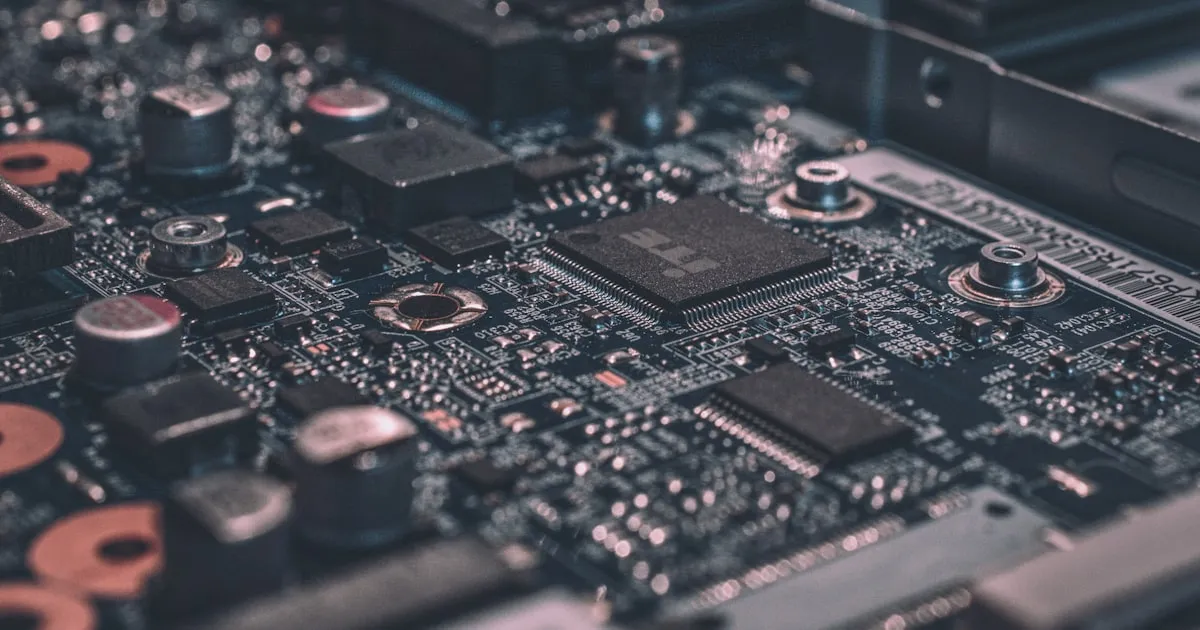
Photo by Jeswin Thomas on Unsplash — Free to use under Unsplash License
About AtlasPCB — We specialize in complex PCB manufacturing for HDI, RF, and high-reliability applications. Explore our RF and high-frequency PCB services, or get an Megtron 6 & 7 low-loss PCB manufacturing . Every order includes free engineering review. Get your quote.
Reviewed by AtlasPCB Engineering Team — IPC-certified manufacturing specialists with 15+ years of production experience in HDI, RF, and high-reliability PCB fabrication. Content based on factory floor data and real customer design reviews.
Frequently Asked Questions
What frequencies will 6G use and why does it matter for PCBs?
What PCB materials are being developed for 6G terahertz applications?
When will 6G PCB materials be commercially available?
- news
- 6G
- terahertz
- pcb-materials
- low-loss
- RF
- research