· Priya Nair · News · 4 min read
U.S. Senate Introduces PCB Reshoring Bill
Senators Gallego and Justice introduce S.4569, the Protecting Circuit Boards and Substrates Act, offering a 25% tax credit for American-made PCBs and a $3 billion grant program. The bill addresses the decline from 30% to 4% U.S. share of global PCB production over three decades.

Senate Bill S.4569 Targets PCB Industry Revival
The Printed Circuit Board Association of America (PCBAA) announced on May 25, 2026, the introduction of a bipartisan Senate bill focused on reshoring America’s printed circuit board manufacturing capability. Senators Ruben Gallego (D-AZ) and Jim Justice (R-WV) introduced S.4569, the Protecting Circuit Boards and Substrates Act, which provides a 25% tax credit for the purchase or acquisition of American-made PCBs.
The legislation is a companion to H.R. 3597 in the House, which includes both the tax credit and a $3 billion grant program to directly support U.S. PCB manufacturers with capital expenditure and capacity expansion.
Three Decades of Decline
The numbers tell a stark story: over the past 30 years, the U.S. share of global PCB production has collapsed from 30% to just 4%. This offshoring accelerated in the 2000s as heavily subsidized Asian manufacturers — particularly in China, Taiwan, Japan, and South Korea — made domestic U.S. production economically noncompetitive.
“These two bills impact both national and economic security. Every semiconductor needs a PCB to function,” said David Schild, Executive Director of PCBAA. “The challenge is that PCB production and know-how have been offshored to heavily subsidized industries in Asia. This leaves American companies with the impossible task of competing with countries.”
The legislation follows the model of semiconductor industry policy (CHIPS Act) that successfully incentivized over $200 billion in private investment for U.S. fab construction. PCBAA argues that PCBs represent the next critical link in the electronics supply chain requiring similar intervention.
What the Bill Means for the Industry
For U.S. PCB Manufacturers
- 25% tax credit on revenues from domestically manufactured PCBs
- $3 billion in grants for facility upgrades, equipment, and expansion
- Potential to attract private investment similar to CHIPS Act multiplier effect
For OEMs and Defense Primes
- Reduced dependency on vulnerable trans-Pacific supply chains
- Compliance pathway for ITAR and security-clearance projects requiring U.S.-origin PCBs
- Potential cost equalization between domestic and offshore sources (tax credit closes the gap)
For the Global Supply Chain
- Signal that PCB manufacturing is joining semiconductors as strategic infrastructure
- May prompt allied nations (EU, Japan, South Korea) to develop similar programs
- Could accelerate high-complexity PCB technology development on U.S. soil
Defense and National Security Context
The bill’s bipartisan sponsorship reflects growing concern about electronics supply chain vulnerabilities exposed during the COVID-19 disruptions and heightened U.S.-China tensions. Current U.S. defense systems rely heavily on Asian-manufactured PCBs — a dependency that the Department of Defense has flagged as a critical vulnerability.
The U.S. currently lacks domestic capability for the most advanced PCB technologies:
- HDI microvias: Limited U.S. manufacturers capable of 3+N+3 structures
- IC substrates: Zero domestic production of ABF substrate for advanced packaging
- Ultra-high layer count: Few facilities capable of 40+ layer military-grade boards
The $3 billion grant program could fund equipment upgrades to close these capability gaps.
Industry Reaction and Timeline
The bill follows months of PCBAA lobbying and a growing coalition of technology companies, defense contractors, and congressional members advocating for electronics manufacturing security. Previous related legislation (MICROCHIPS Act proposals) laid the groundwork for this more targeted approach.
Congressional observers expect the bill to advance through committee hearings in Q3 2026, with potential floor votes before year-end given bipartisan support and alignment with the broader industrial policy agenda.
What This Means for PCB Buyers
For companies currently sourcing PCBs from Asia, the legislation creates several strategic considerations:
- Dual-sourcing: Qualifying domestic suppliers now may provide advantage when tax credits activate
- Lead time resilience: U.S. manufacturing eliminates 3-4 week shipping transit for urgent orders
- IP protection: Domestic manufacturing reduces exposure to technology transfer risks
- Compliance: Government and defense contracts increasingly require domestic origin documentation
Whether the bill passes in its current form or evolves through committee, the direction is clear: U.S. policy is moving toward incentivizing domestic PCB production, and companies that position early will benefit most.
Source: PCB Directory (May 25, 2026), PCBAA announcement, Congress.gov H.R. 3597
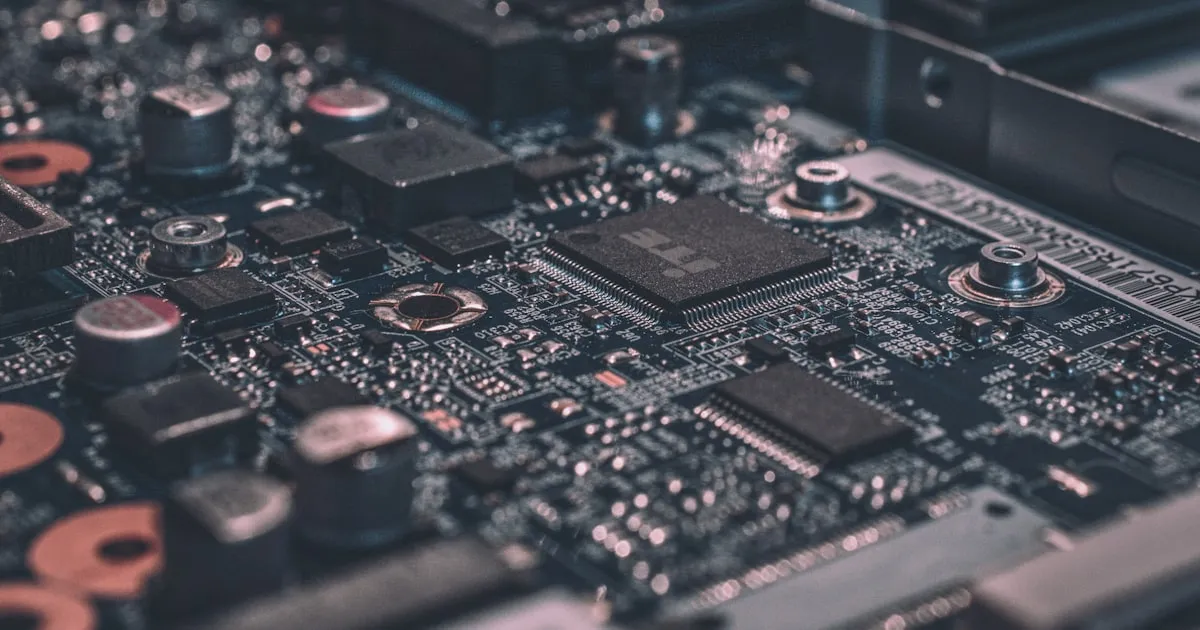
Image: Photo by Brandon Mowinkel via Unsplash
AtlasPCB serves international customers from our Shenzhen manufacturing facility, providing rapid-turn complex PCBs with full traceability and quality documentation. For projects requiring specific origin documentation or multi-source strategies, contact our engineering team →
About AtlasPCB — We specialize in complex PCB manufacturing for HDI, RF, and high-reliability applications. Explore our full PCB manufacturing capabilities . Every order includes free engineering review. Get your quote.
Reviewed by AtlasPCB Engineering Team — IPC-certified manufacturing specialists with 15+ years of production experience in HDI, RF, and high-reliability PCB fabrication. Content based on factory floor data and real customer design reviews.
- news
- PCB manufacturing
- reshoring
- US policy
- supply chain
- PCBAA