· Thomas Webb · News · 4 min read
SMIC Reports Surge in Specialty Chip Orders as Global Fabs Pivot to AI and HBM — PCB Substrate Demand Follows
China's largest foundry sees order influx for standard and specialty processes as TSMC, Samsung, and Intel shift capacity to AI chips, creating downstream PCB substrate demand for power management, analog, and automotive ICs.
In its first-quarter 2026 earnings call on May 15, Semiconductor Manufacturing International Corporation (SMIC) outlined a strategic shift in the global foundry landscape that is creating significant downstream demand for PCB substrates and standard multilayer boards.
The AI Capacity Shift
As leading international foundries — TSMC, Samsung Foundry, and Intel Foundry Services — aggressively reallocate capacity toward high-margin AI processors, High Bandwidth Memory (HBM), and advanced packaging, a structural supply gap has emerged for standard and specialty semiconductor products.
SMIC management described a “significant influx of orders” from customers who previously manufactured at global foundries but now find themselves de-prioritized as those fabs chase AI revenue. The products migrating to SMIC include:
- Power management ICs (PMICs): Essential for every electronic product, now facing allocation at mainstream foundries
- Analog and mixed-signal chips: Audio codecs, sensor interfaces, and data converters on mature 28nm–180nm nodes
- Automotive MCUs and sensors: Safety-critical components where supply continuity matters more than leading-edge performance
- IoT and connectivity chips: Wi-Fi, Bluetooth, and Zigbee radios manufactured on cost-effective process nodes
PCB Industry Impact
This capacity reallocation has direct implications for PCB manufacturers and designers:
1. Increased Standard PCB Volume
Every specialty IC that SMIC produces needs a PCB to sit on. The surge in PMIC, MCU, and analog chip production translates directly to increased demand for:
- 4–8 layer standard multilayer PCBs for consumer and industrial products
- High-density automotive PCBs meeting [IPC-6012 Class 3]/blog/ipc-a-600-class-2-vs-class-3-pcb-acceptability/) requirements
- Power electronics boards with thick copper (2–4 oz) for PMIC evaluation and final products
2. IC Substrate Demand Diversification
While AI chips drive demand for ultra-advanced IC substrates (ABF-based, <10 µm L/S), the specialty chip growth creates parallel demand for:
- Standard BT-based IC substrates for QFP and BGA packages
- Lead frame substrates for analog and power devices
- Flip-chip substrates at 100–200 µm pitch (not the sub-10 µm AI-grade substrates)
This diversification benefits PCB manufacturers who serve the IC substrate market but lack the capability for the most advanced AI substrate geometries.
3. Supply Chain Geography Shifts
With SMIC capturing overflow orders primarily from Chinese domestic customers and multinational companies hedging supply risk, the associated PCB demand concentrates in:
- Chinese domestic PCB manufacturers (serving SMIC’s customer base)
- Southeast Asian PCB fabs (serving multinationals diversifying from China)
- Specialty PCB makers worldwide who serve automotive and industrial OEMs
Applied Materials Confirms the Capacity Buildout
Reinforcing SMIC’s narrative, Applied Materials reported record Q2 2026 results this week and detailed an extensive strategy to scale global manufacturing capacity. The semiconductor equipment giant sees a “sustained growth cycle expected to last into 2027 and beyond,” driven by:
- AI infrastructure buildout requiring advanced packaging equipment
- China’s domestic semiconductor expansion (including SMIC’s new fabs)
- Legacy node capacity additions for automotive and industrial chips globally
Applied Materials’ visibility into equipment orders — which lead actual chip production by 12–18 months — confirms that PCB demand from semiconductor manufacturing expansion will continue through at least 2027.
Hua Hong Semiconductor Echoes the Trend
Hua Hong Semiconductor, another major Chinese specialty foundry, reported similar dynamics in its Q1 2026 earnings call (May 14). The company cited the “unmistakably positive impact of AI” on its business — not from making AI chips directly, but from the second-order effect of other foundries deprioritizing the standard chips that Hua Hong produces.
Hua Hong is expanding into power semiconductor processes (BCD, IGBT, SiC) — all of which require specialized [high-voltage PCB designs]/blog/high-voltage-pcb-design/) and thick-copper manufacturing capability.
Samsung Labor Dispute Adds Uncertainty
Adding to the semiconductor supply narrative, Samsung Electronics’ escalating labor dispute is introducing fresh uncertainty into the memory market. Spot prices for DRAM and NAND have moved higher as South Korea’s government pushes management and labor to resume talks ahead of a planned 18-day strike.
If the strike proceeds, it would temporarily constrain memory supply — and memory packaging requires specialized PCB substrates (BT-based multi-layer boards with controlled impedance for DDR5 and HBM interposers). Any production disruption at Samsung ripples through the substrate supply chain within weeks.
What This Means for PCB Sourcing Decisions
For hardware engineering teams making PCB procurement decisions in 2026:
Short-term (next 6 months):
- Expect stable to increasing demand for standard 4–8 layer PCBs as specialty chip production ramps
- Lead times for automotive-grade multilayer boards may extend by 1–2 weeks as fabs prioritize high-volume orders
- Material costs remain elevated due to copper and laminate pricing (echoing the [NCAB supply chain outlook]/news/news-ncab-pcb-supply-chain-outlook-may-2026/))
Medium-term (2026–2027):
- New fab capacity coming online will eventually ease component shortages, driving PCB demand higher
- The shift toward domestic/regional supply chains creates opportunities for PCB manufacturers with multi-geography capabilities
- Power electronics PCB demand will grow disproportionately as EV, renewable energy, and data center power systems scale
AtlasPCB serves the full spectrum of these applications — from standard multilayer prototypes to high-reliability production boards for automotive and industrial end markets. Our engineering team monitors supply chain dynamics to help customers plan procurement timing effectively.
Sources: DIGITIMES, SMIC Q1 2026 Earnings Call (May 15, 2026), Applied Materials Q2 2026 Results
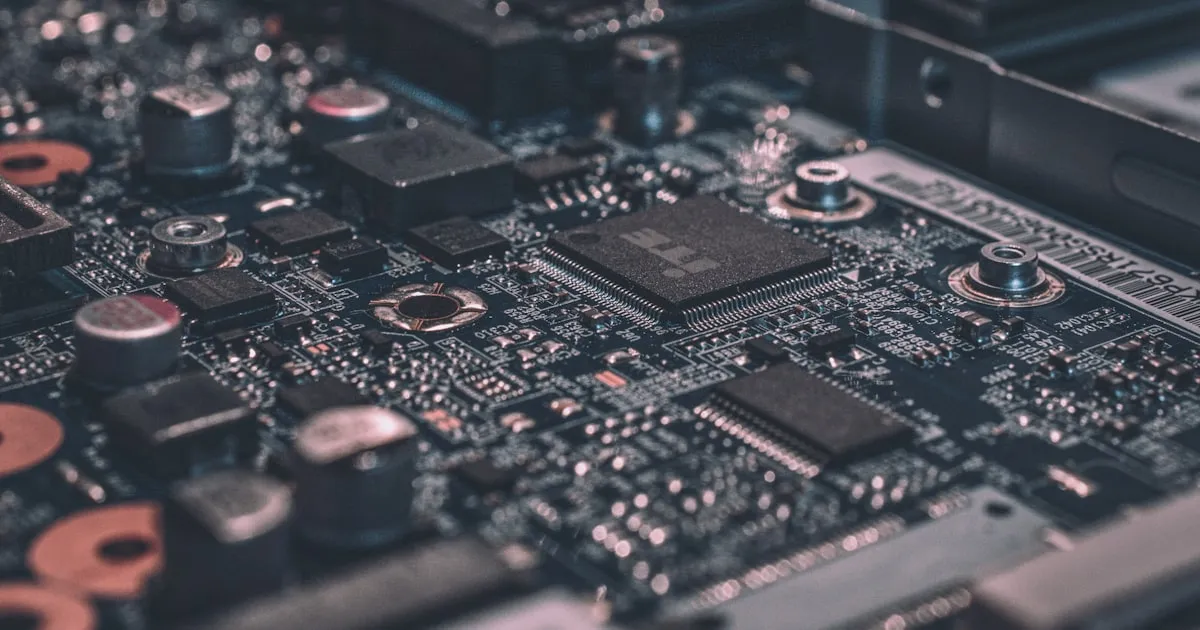
Image: Alexandre Debiève via Unsplash
About AtlasPCB — We specialize in complex PCB manufacturing for HDI, RF, and high-reliability applications. Explore our impedance-controlled PCB manufacturing . Every order includes free engineering review. Get your quote.
Reviewed by AtlasPCB Engineering Team — IPC-certified manufacturing specialists with 15+ years of production experience in HDI, RF, and high-reliability PCB fabrication. Content based on factory floor data and real customer design reviews.
- news
- smic
- semiconductor
- ai chips
- hbm
- specialty foundry
- pcb substrate