· AtlasPCB Engineering Team · News · 5 min read
Semiconductor Industry on Track for $1 Trillion
Global chip sales reached $298.5B in Q1 2026, the strongest quarterly growth in 70 years. SIA, IDC, and Future Horizons all project the semiconductor market will pass $1 trillion this year, with massive implications for PCB substrate and packaging demand.
The Trillion-Dollar Milestone Is No Longer a Forecast — It Is Happening
The global semiconductor industry is heading for a historic milestone. According to data released by the Semiconductor Industry Association (SIA) on May 12, worldwide chip sales reached $298.5 billion in the first quarter of 2026 — a 25% increase over Q4 2025 and the strongest quarterly growth rate in the industry’s 70-year history.
Multiple analyst firms now project the full-year market will surpass $1 trillion:
- SIA/John Neuffer: “Global chip sales remain on track to reach $1 trillion in 2026, with Q1 sales significantly exceeding sales in Q4 2025.”
- IDC: Projects $1.29 trillion in 2026, up 52.8% year over year from $842.8 billion in 2025.
- Future Horizons (Malcolm Penn): Base case of $1.0–1.1 trillion, with an optimistic scenario of $1.6 trillion if AI demand holds.
Source: SIA Press Release, May 12, 2026; eeNews Europe
Regional Growth: Asia Pacific Leads at 108%
Year-over-year regional chip sales growth in March 2026 reveals the AI-driven nature of the surge:
| Region | YoY Growth (March 2026) |
|---|---|
| Asia Pacific / All Other | +108.5% |
| Americas | +83.1% |
| China | +74.8% |
| Europe | +46.5% |
| Japan | +7.4% |
The Asia Pacific dominance reflects the concentration of AI server assembly, data center construction, and advanced packaging capacity in Taiwan, Korea, and Southeast Asia. China’s 74.8% growth signals that despite export controls on the most advanced chips, the broader semiconductor market — including mature-node chips for automotive, industrial, and consumer applications — is booming.
Memory at the Epicenter
IDC’s analysis highlights the extraordinary dynamics in the memory segment:
- DRAM revenues are projected to nearly triple in 2026 to $418.6 billion, driven by insatiable demand for high-bandwidth memory (HBM) and DDR5 from hyperscalers and AI infrastructure providers.
- Non-memory semiconductors are growing at a more measured pace, reaching $693.5 billion in 2026.
“The memory market is at an unprecedented inflection point, with demand materially outpacing supply,” said Jeff Janukowicz, Research VP at IDC. “The market is shifting from a cyclical recovery following the 2023 downturn to a more structurally constrained environment.”
The Contrarian View: Warning Signs in the Boom
Not everyone is euphoric. Malcolm Penn of Future Horizons — the only major analyst predicting a near-term downturn — points to several warning signs:
ASP-driven growth, not unit growth: “This time it was the average selling price that recovered, which is very unusual. When ASP growth starts to slow, it collapses.”
AI masking broader weakness: “We have a red-hot datacenter boom, but the rest of the market is struggling. It’s masking a lot of things happening with excess capacity and inventories.”
Capital spending above average: CapEx levels are historically predictive of coming downturns when they overshoot sustainable demand.
DRAM capacity incoming: “A downturn will happen, maybe even this year but certainly next year, as DRAM capacity comes online at the end of this year.”
Penn’s most pessimistic scenario puts 2026 at $901 billion — still enormous, but well below the $1.29 trillion IDC projects.
What This Means for the PCB Industry
The semiconductor surge has direct and immediate implications for PCB manufacturers and their customers:
Substrate and Material Demand
Every chip needs a substrate. Every AI server needs a motherboard, backplane, and network switch board. The PCB material supply chain is already under pressure:
- Copper-clad laminate (CCL) prices have surged, with Korean import prices up 74.5% year-over-year as AI demand absorbs capacity for high-layer-count, low-loss substrates.
- ABF substrates for advanced IC packaging remain structurally constrained, with Ajinomoto holding 97% market share.
- High-speed laminates (Megtron 7, TU-872) face extended lead times as data center builds consume available supply.
PCB Fabrication Capacity
The NCAB Group’s May 2026 supply chain outlook describes the current situation as a “seller’s market” for PCBs — the first in several years. Factory utilization is at unprecedented levels, with even facilities not directly producing AI-grade products feeling the strain as upstream capacity is fully absorbed.
For hardware engineers planning production runs, the implications are clear:
- Lead times are extending — Standard multilayer boards that were available in 5–7 days are now quoting 8–12 days.
- High-layer-count and HDI boards are experiencing the most acute capacity pressure, with some configurations quoting 4–6 weeks.
- Price stability is gone — Annual pricing frameworks are no longer viable as material costs shift quarterly.
AtlasPCB’s Perspective
At our facility, we are seeing the same capacity dynamics. Standard 4-6 layer boards still ship on competitive timelines, but complex builds — 12+ layers, HDI, and anything requiring low-loss laminates — benefit from early engagement and secured material allocations. If you’re designing a product that will enter production in Q3-Q4 2026, now is the time to lock in capacity.
The Bigger Picture: A Structural Shift, Not Just a Cycle
Whether Penn’s downturn prediction materializes or not, one thing is clear: the semiconductor industry is undergoing a structural transformation. The AI infrastructure buildout represents a new demand category that did not exist at this scale two years ago. The PCB industry must scale capacity, material supply chains, and workforce accordingly — or risk becoming the bottleneck for the trillion-dollar chip industry it supports.
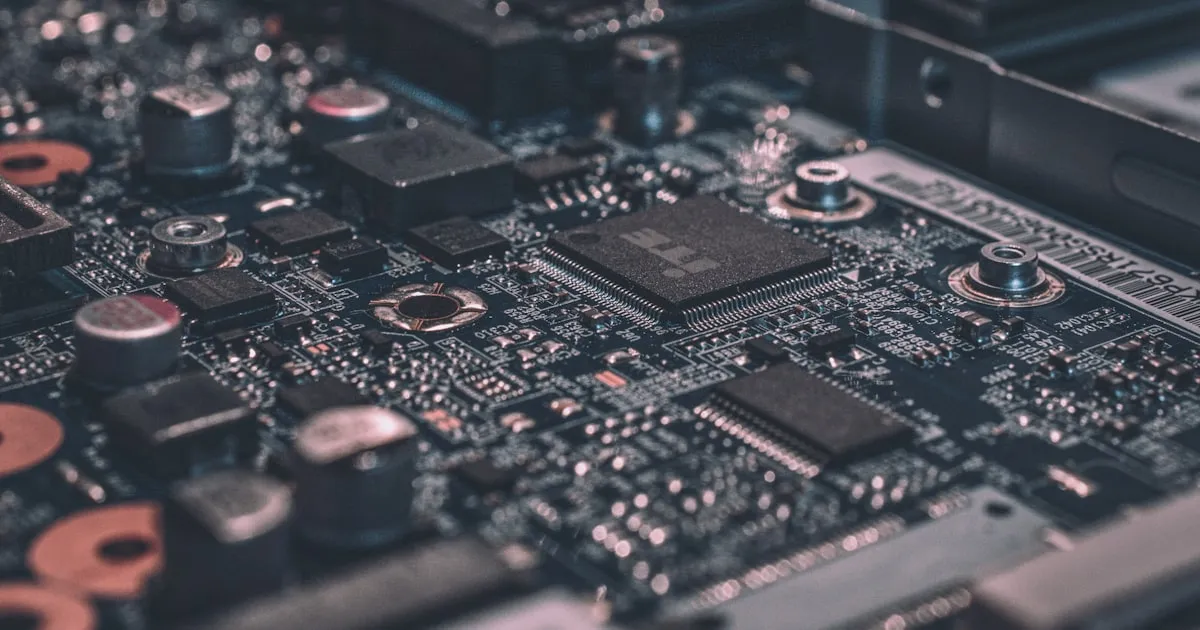
Image: Alexandre Debiève via Unsplash
Sources:
- Semiconductor Industry Association (SIA), “Global Semiconductor Sales Reach $298.5 Billion in Q1 2026,” May 12, 2026
- eeNews Europe, “Semiconductor industry heads for $1tn in 2026,” May 11, 2026
- IDC, “Worldwide Semiconductor Revenue Forecast,” May 2026
- NCAB Group, “PCB Supply Chain Outlook — May 2026”
About AtlasPCB — We specialize in complex PCB manufacturing for HDI, RF, and high-reliability applications. Explore our impedance-controlled PCB manufacturing . Every order includes free engineering review. Get your quote.
Reviewed by AtlasPCB Engineering Team — IPC-certified manufacturing specialists with 15+ years of production experience in HDI, RF, and high-reliability PCB fabrication. Content based on factory floor data and real customer design reviews.
- news
- semiconductor
- market-data
- pcb-demand
- ai
- industry-trends