· AtlasPCB Engineering Team · News · 3 min read
PCB Prices Surge 40% as Iran Conflict Disrupts
The Iran-Saudi Arabia conflict has triggered the most severe PCB supply chain disruption since COVID-19, with prices soaring 40% in April after the Jubail petrochemical complex — supplier of 70% of global high-purity PPE resin — was forced offline.

The global PCB industry is facing its most severe supply disruption since the COVID-19 pandemic. In April 2026, PCB prices surged as much as 40% in a single month, according to Goldman Sachs analysts, as the Iran conflict severed critical material supply lines and intensified existing shortages in the electronics supply chain.
The Trigger: Jubail Petrochemical Complex Offline
The crisis traces to early April when military strikes hit Saudi Arabia’s Jubail petrochemical complex, forcing a halt in production of high-purity polyphenylene ether (PPE) resin — a critical base material for manufacturing PCB laminates. The complex operator accounts for approximately 70% of the world’s high-purity PPE supply.
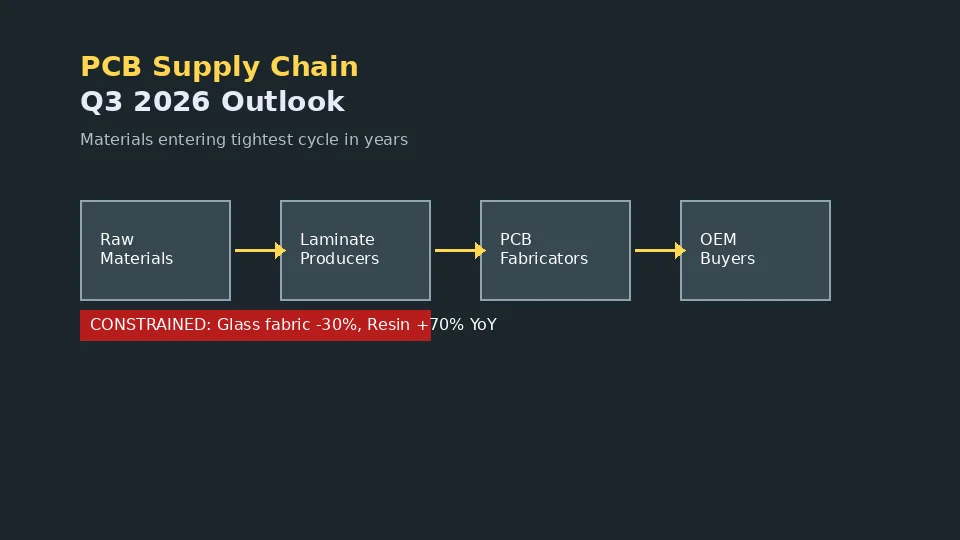
PPE resin is essential for producing halogen-free, high-performance copper-clad laminates (CCL) used in everything from smartphone motherboards to AI server backplanes. With the operator unable to resume output and Gulf shipping severely disrupted, the global PCB industry faces months of constrained supply.
Cascading Material Shortages
The disruption extends beyond PPE resin:
Copper foil prices: Surged 30% year-to-date, with the rally accelerating since March. Copper accounts for approximately 60% of total raw material costs in PCB manufacturing, according to Victory Giant Technology, a major Chinese PCB supplier for Nvidia.
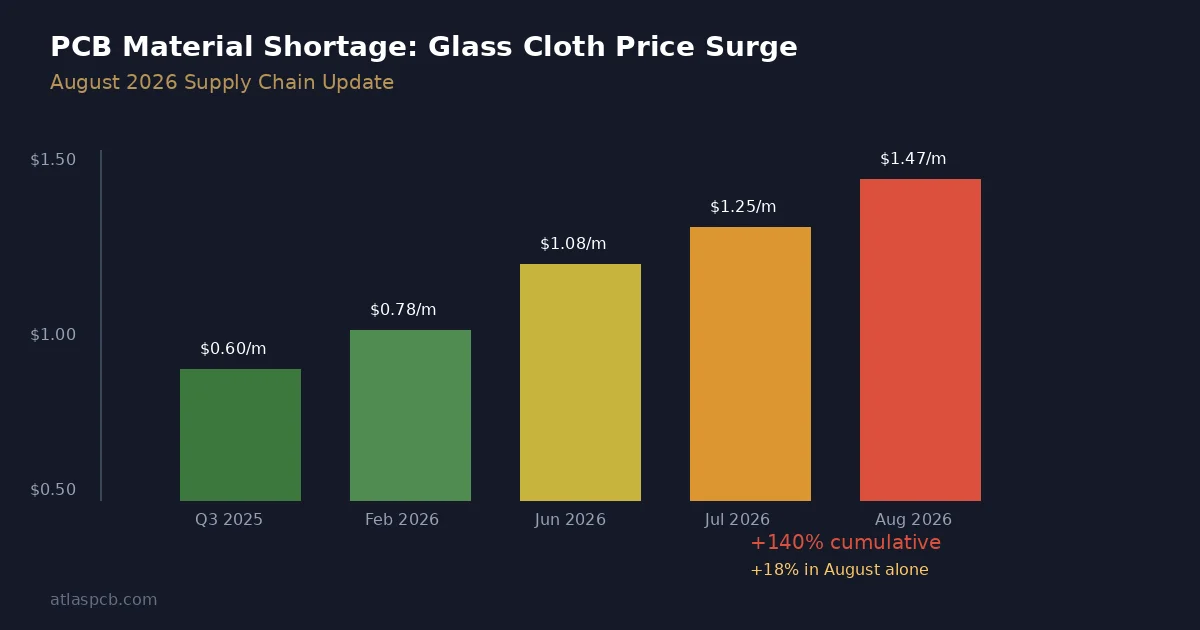
Glass fiber: Supplies constrained as production capacity shifts toward high-end grades required for AI server PCBs.
Epoxy resin lead times: Extended to 15 weeks from a normal 3 weeks, according to Daeduck Electronics, a Korean PCB maker supplying Samsung, SK Hynix, and AMD.
Market Impact
The Prismark research firm projects the global PCB industry will reach $95.8 billion in 2026, representing 12.5% growth — but the supply disruption is reshaping who captures that growth.
Current pricing benchmarks from Victory Giant Technology:
- Multi-layer PCBs: approximately $204 per square meter
- High-end AI server PCBs: approximately $1,970 per square meter
Cloud service providers are reportedly willing to accept further increases, as demand for AI infrastructure is expected to outstrip supply for years. This pricing dynamic means consumer electronics and automotive sectors — with lower margins — may face allocation challenges as manufacturers prioritize high-margin AI server customers.
Industry Response
Daeduck Electronics (South Korea) has begun customer discussions on price increases, with executives indicating their priority has shifted from meeting demand to securing supplier relationships.
Ventec International reports laminate price increases of 10-15% on high-end grades and 20-25% on mid/low grades, with expectations of further hikes as existing inventory depletes.
The TPCA (Taiwan Printed Circuit Association) notes that supply chain resources are tilting toward high-end products including DDR5 and high-bandwidth memory (HBM), compounding upward pressure on raw material prices across all PCB segments.
What This Means for Hardware Engineers
For engineers and procurement teams managing PCB projects:
- Lock in quotes quickly: Current pricing may not hold beyond 30-day validity periods
- Consider alternative materials: Where specifications allow, explore laminates with lower PPE content
- Extend lead time expectations: Standard 2-3 week lead times may stretch to 4-6 weeks for affected materials
- Discuss allocation priority: Establish relationships with fabricators who have secured material supply
- Review BOMs for supply risk: Identify which boards use high-end laminates most affected by the shortage
AtlasPCB Perspective
AtlasPCB has secured pre-contracted material supplies through Q3 2026 and is maintaining current lead times for existing customers. For new projects, our engineering team can recommend material alternatives where specifications allow flexibility — potentially reducing both cost exposure and lead time risk without compromising electrical performance.
For projects requiring standard FR-4 and mid-range materials, current disruption impact is moderate. For high-frequency and ultra-low-loss laminates, early engagement is strongly recommended.
Source: The Silicon Review, Reuters, Goldman Sachs Research, April-May 2026.
About AtlasPCB — We specialize in complex PCB manufacturing for HDI, RF, and high-reliability applications. Explore our full PCB manufacturing capabilities, or get an instant online quote . Every order includes free engineering review. Get your quote.
Reviewed by AtlasPCB Engineering Team — IPC-certified manufacturing specialists with 15+ years of production experience in HDI, RF, and high-reliability PCB fabrication. Content based on factory floor data and real customer design reviews.
- industry news
- PCB supply chain
- material shortage
- copper foil
- PPE resin
- AI servers