· AtlasPCB Engineering Team · News · 3 min read
North American PCB Bookings Surge 25.5% in April
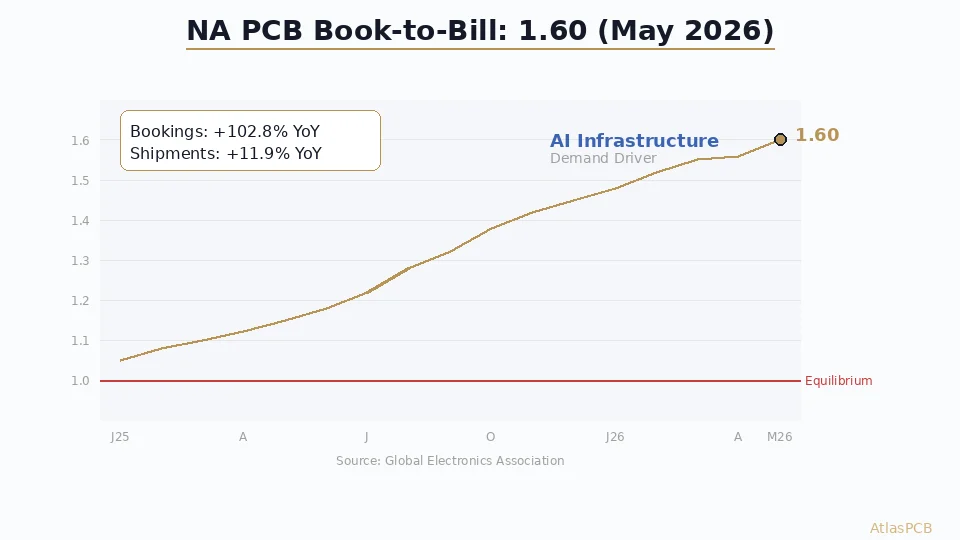
The Global Electronics Association reports April 2026 PCB bookings jumped 25.5% YoY with book-to-bill ratio reaching 1.24, indicating growing production backlog and strong demand heading into H2 2026.
North American PCB Demand Accelerates Sharply
The Global Electronics Association announced on May 29, 2026, that North American PCB bookings surged 25.5% year-over-year in April, pushing the industry’s book-to-bill ratio to 1.24 — its strongest reading in more than a year. Shipments also increased, rising 5.8% compared to April 2025 and 15.6% compared to March 2026.
The data confirms a broader trend of accelerating demand that began in early 2026, driven by AI infrastructure buildout, defense modernization, automotive electrification, and reshoring momentum. Year-to-date bookings are up 4.1% compared to the same period in 2025, while YTD shipments have increased 8.9%.
What the Book-to-Bill Ratio Signals
A book-to-bill ratio above 1.00 indicates that incoming orders exceed current shipments — meaning production backlog is growing and future revenue is secured. At 1.24, the industry is booking $1.24 in new orders for every $1.00 shipped. This is the highest level since early 2025 and signals:
- Growing backlog: Fabricators have 3–6 months of increasing work ahead
- Lead time extension: Expect standard PCB lead times to stretch from 5–7 days to 8–12 days for standard boards
- Capacity utilization climbing: North American fabs moving toward 75–85% utilization
- Pricing pressure: Tight capacity typically leads to selective price increases on complex boards
“North American PCB demand picked up noticeably in April. The three-month book-to-bill ratio climbed to 1.24, its strongest reading in more than a year,” said Dr. Shawn DuBravac, Global Electronics Association’s chief economist. “The demand picture for PCB is firming and building backlog could help support production through the back half of the year.”
Demand Drivers Behind the Surge
Several converging factors are fueling the order increase:
AI/Data Center Infrastructure: Hyperscaler buildout continues at record pace. High-layer-count, HDI, and substrate-like PCBs for AI servers and switches represent the fastest-growing segment. These are complex boards with high ASPs (average selling prices).
Defense and Aerospace: U.S. defense budgets and allied nation spending increases are driving demand for ITAR-compliant, domestically produced PCBs. The recent U.S. Senate PCB reshoring bill with 25% tax credits further encourages domestic orders.
Automotive Electrification: EV power electronics, ADAS systems, and in-vehicle networking require increasing PCB content per vehicle — estimated at $70–$100 per BEV versus $30–$50 for traditional ICE vehicles.
Reshoring Momentum: Supply chain de-risking continues pushing orders toward North American fabricators, even at premium pricing. Companies are diversifying away from single-source Asian supply chains.
Implications for Hardware Teams
For hardware engineers and procurement teams, the rising book-to-bill ratio means:
- Order earlier: If your project has a fixed launch date, place PCB orders 2–3 weeks earlier than usual to account for extended lead times
- Lock in pricing: Fabricators may implement surcharges as utilization climbs. Framework agreements or blanket orders can protect pricing
- Proto capacity tight: Quick-turn prototype slots (24–72 hour) will be harder to secure. Build relationships with multiple fabricators
- Complex boards first: HDI, flex-rigid, and high-layer-count boards face the tightest capacity. Standard 2–4 layer boards remain relatively available
AtlasPCB’s Capacity Position
At AtlasPCB, we’ve expanded production capacity ahead of this demand surge. Current lead times remain competitive:
- Standard 2–6 layer FR-4: 5–7 business days
- Multilayer (8–16L): 8–12 business days
- HDI with microvias: 10–15 business days
- Quick-turn prototypes: 24–72 hours (limited allocation)
We recommend customers with Q3/Q4 production builds begin quoting now to secure favorable terms.
Source: Global Electronics Association, May 29, 2026
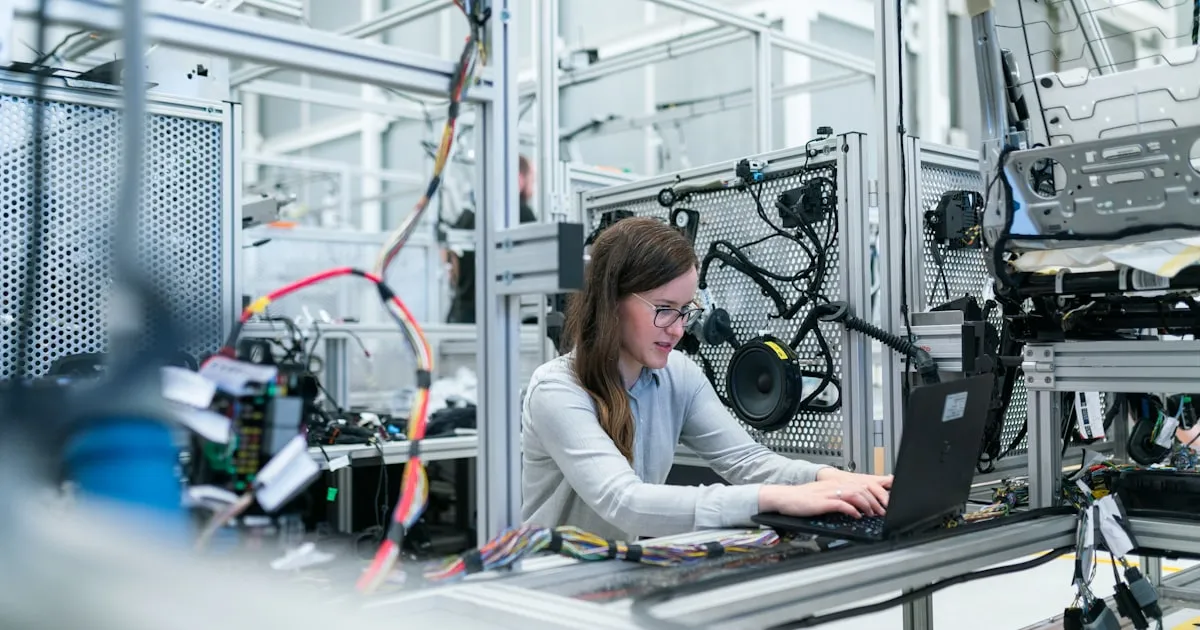
Image: Science in HD via Unsplash
Planning a production run in H2 2026? Get a quote now to lock in competitive pricing and lead times before capacity tightens further. Explore our manufacturing capabilities for your next build.
About AtlasPCB — We specialize in complex PCB manufacturing for HDI, RF, and high-reliability applications. Explore our full PCB manufacturing capabilities, or get an instant online quote . Every order includes free engineering review. Get your quote.
Reviewed by AtlasPCB Engineering Team — IPC-certified manufacturing specialists with 15+ years of production experience in HDI, RF, and high-reliability PCB fabrication. Content based on factory floor data and real customer design reviews.
- news
- PCB industry
- book-to-bill
- market trends
- Global Electronics Association
- demand