· David Okafor · News · 3 min read
Lava International to Invest $114M in Multilayer
Indian smartphone maker Lava International commits $114 million over five years to domestic production of multilayer PCBs, display modules, and camera modules, signaling India's growing role in electronics manufacturing localization.

India’s Electronics Localization Push Reaches PCB Layer
Indian mobile phone manufacturer Lava International has announced plans to invest INR 11 billion (approximately USD $114 million) over five years to build domestic production capacity for critical smartphone components—including multilayer printed circuit boards. The investment is expected to create 8,500 jobs as part of India’s broader push to localize electronics manufacturing.
The announcement, reported by Financial Express and confirmed through India’s Electronics Components Manufacturing Scheme submission, signals that India’s electronics industry is moving beyond simple assembly into higher-value component manufacturing.
“We have decided to make critical components ourselves for more value addition,” said Sanjeev Agarwal, ED & CEO of Lava International. “We are exploring some partnerships for components, and we also have our own in-house strengths because we design our phones ourselves.”
What Lava Plans to Manufacture
The investment covers four key component categories:
- Multilayer PCBs: For smartphone main boards (typically 8–12 layer HDI designs)
- Display modules: LCD and AMOLED panel assembly
- Camera modules: Image sensor packaging and lens assembly
- Enclosures: Metal and composite housings
Of these, multilayer PCB fabrication represents the most technically demanding capability. Smartphone main boards require:
- 8–12 layer HDI construction with microvias (≤100 µm)
- Any-layer via technology for component-dense designs
- Fine line/space: 3/3 mil or finer for BGA escape routing
- Impedance control: ±10% for high-speed interfaces (USB, MIPI, DDR)
- Advanced materials: Low-Dk prepreg for 5G antenna integration
Context: India’s PCB Manufacturing Gap
India currently manufactures less than 3% of the PCBs used in its domestic electronics assembly—the vast majority are imported from China, Taiwan, and South Korea. The government’s Production Linked Incentive (PLI) scheme and Electronics Components Manufacturing Scheme aim to change this by subsidizing capital expenditure for domestic PCB fabrication.
Recent investments suggest momentum is building:
| Company | Investment | Capability Target |
|---|---|---|
| Lava International | $114M | Multilayer PCB + modules |
| Incap India | €1.53M | SMT line upgrade (Tumkur) |
| Kaynes Technology | $80M+ | HDI PCB fab (planned) |
| AT&S (Austria) | $1.6B | IC substrate plant (Kulim, Malaysia—regional) |
However, the gap between announcement and production-quality output is significant. Building a competitive multilayer PCB fabrication facility requires:
- 18–24 months for facility construction and equipment installation
- 6–12 months for process qualification
- Skilled workforce development (India currently lacks experienced PCB process engineers)
- Supply chain for chemicals, laminates, and drilling consumables
Implications for the Global PCB Supply Chain
Lava’s investment, while modest compared to top-tier fabricators like Unimicron or Zhen Ding (which invest $1B+ annually), is significant for two reasons:
1. Captive manufacturing reduces import dependency: India’s smartphone industry assembled 300M+ units in 2025 but imported nearly all PCBs. Even capturing 10% domestically changes the logistics equation.
2. Government incentive validation: If Lava’s application is approved under the Electronics Components Manufacturing Scheme, it signals to larger players (Samsung, Foxconn) that India is serious about PCB-level localization.
The challenge remains cost competitiveness. Chinese fabricators benefit from 30+ years of ecosystem development, established chemical supply chains, and massive scale economics. India’s initial production will likely focus on lower-complexity boards (4–8 layers) before attempting the 12+ layer HDI designs that smartphones demand.
What This Means for PCB Buyers
For hardware companies currently sourcing PCBs from China, India’s emerging capability adds a future diversification option—particularly relevant as US-China trade tensions and tariff uncertainty continue reshaping supply chains.
However, for today’s production needs, established fabricators with proven process capability remain the reliable choice. AtlasPCB serves international customers who need high-quality multilayer and HDI PCB manufacturing with certified processes and fast lead times, providing supply chain confidence while newer manufacturing regions develop their capabilities.
Source: Evertiq, May 22, 2026; original reporting by Financial Express and PTI
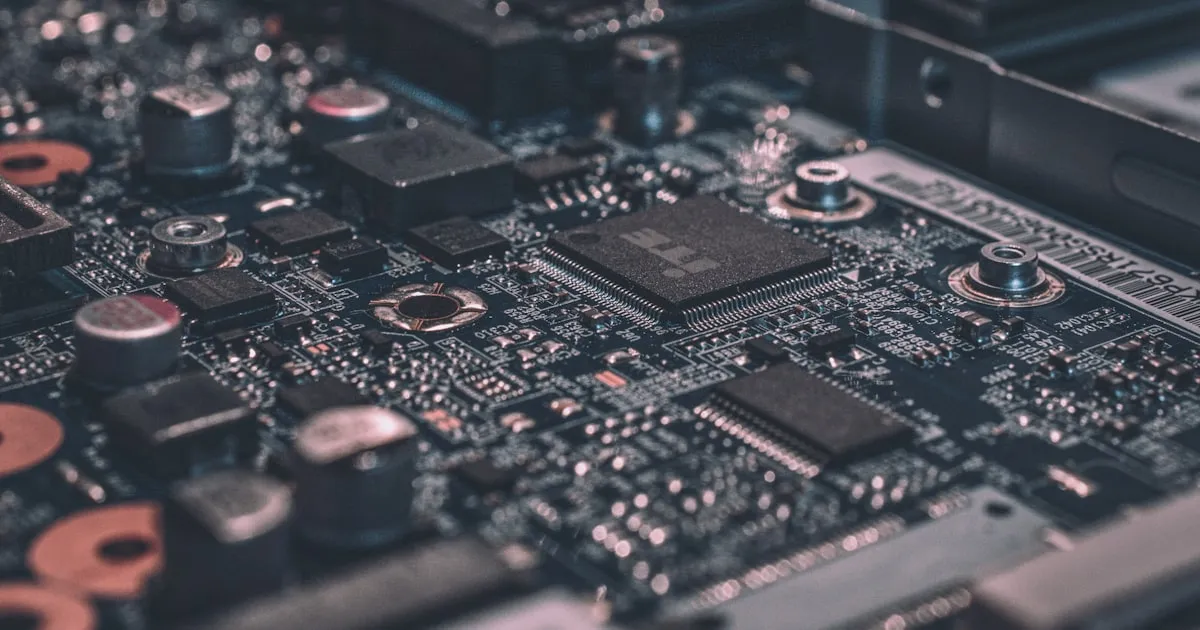
Image: ThisisEngineering via Unsplash
Related Articles
About AtlasPCB — We specialize in complex PCB manufacturing for HDI, RF, and high-reliability applications. Explore our multilayer PCB fabrication up to 30 layers, or get an full PCB manufacturing capabilities . Every order includes free engineering review. Get your quote.
Reviewed by AtlasPCB Engineering Team — IPC-certified manufacturing specialists with 15+ years of production experience in HDI, RF, and high-reliability PCB fabrication. Content based on factory floor data and real customer design reviews.
- news
- PCB manufacturing
- India
- Lava International
- localization
- multilayer PCB
- electronics manufacturing
- supply chain