· AtlasPCB Engineering Team · News · 4 min read
Itera Raises $12M for Fluid Circuit Board That
Deep tech startup Itera emerges from stealth with the world's first fluid circuit board using glass and liquid metal, enabling engineers to test and iterate PCB designs in under a minute instead of weeks.
The $12M Bet on Eliminating PCB Prototype Wait Times
Itera, a deep tech startup, has emerged from stealth with what it describes as the world’s first fluid circuit board — a platform that lets engineers test and modify electronic designs instantly with real components. The company announced $12 million in seed funding from Upfront Ventures, Costanoa Ventures, and Colle Capital on May 29, 2026.
The technology targets the most frustrating bottleneck in hardware development: the 2–6 week wait between design changes and physical prototype availability.
How It Works: Glass and Liquid Metal
Rather than producing a fixed copper-and-FR-4 board for each design iteration, Itera uses a system based on glass substrates and liquid metal conductors that can be reconfigured in under one minute:
- Reconfigurable interconnects: Liquid metal paths can be rerouted programmatically
- Real component testing: Engineers work with actual ICs, passives, and connectors — not simulations
- Full electrical probing: Any node in the circuit can be measured directly
- Remote access: Designs can be uploaded, tested, and modified from anywhere
This approach turns the traditional build-test-revise cycle (days to weeks per iteration) into a continuous workflow where engineers can explore dozens of design variations in a single day.
The Problem Being Solved
Traditional PCB prototyping follows a rigid sequence:
- Schematic capture and layout → 1–5 days
- Fabrication → 2–10 days (quick-turn) to 3–4 weeks (standard)
- Assembly → 1–5 days
- Testing and debug → 1–3 days
- Revision → repeat from step 1
Each full cycle consumes 2–6 weeks and costs $500–$5,000 depending on complexity. A typical product development might require 3–8 iterations, meaning 2–12 months of calendar time spent waiting for physical boards.
“Software developers have been able to write code, test, and iterate in real time for decades,” said AJ Cooper, CEO and co-founder of Itera. “Itera is making hardware easy. For the first time ever, an engineer can change a circuit and test it again before their coffee gets cold.”
Electronics-as-a-Service Model
Itera operates on an Electronics-as-a-Service (EaaS) model:
- Customer-specified components are assembled at secure US-based facilities
- Designs are tested and refined remotely until ready for manufacturing
- Production files are generated once the design is validated
This model separates prototyping from production — iterate endlessly during development, then commit to a fixed PCB only when the design is proven.
Early Traction with Defense and Automotive
Initial production capacity has already been reserved by:
- A top global automotive manufacturer
- Multiple defense startups
- Large technology and semiconductor firms currently evaluating through hands-on testing
The defense and automotive markets are particularly receptive because:
- Development cycles are long and expensive
- Regulatory requirements demand extensive testing
- Supply chain constraints make prototype lead times unpredictable
- Localized (US-based) development aligns with ITAR and security requirements
Limitations and Context
While revolutionary for prototyping, fluid circuit boards won’t replace conventional PCBs for production:
- Not for volume manufacturing: The technology is a development tool, not a production platform
- Parasitic unknowns: Liquid metal interconnects have different electrical properties than copper traces — final designs still need conventional PCB validation
- Frequency limitations: High-frequency designs (>1 GHz) require controlled impedance that fluid routing may not replicate
- Component density: Current-generation prototype platforms likely cannot match the routing density of modern HDI PCBs
The technology is complementary to — not a replacement for — traditional PCB fabrication. Once a design is validated on Itera’s platform, it still needs to be manufactured as a conventional PCB for production.
What This Means for the Industry
Itera represents a broader trend of applying software-development methodologies to hardware:
- Simulation-first tools (SPICE, EM solvers) reduce but don’t eliminate the need for physical testing
- Quick-turn PCB services (24-hour delivery) compress but don’t remove fabrication wait
- Fluid circuit boards potentially eliminate fabrication entirely during the development phase
For PCB manufacturers, this is actually positive news — faster iteration means more confidence in final designs, which translates to fewer respins during production and higher first-pass yields.
At AtlasPCB, we frequently see customers order 3–5 prototype revisions before committing to production. If tools like Itera’s reduce that to 1–2 physical prototypes, it means our customers arrive with more mature designs — reducing engineering changes and accelerating their time to market. We support this transition by offering rapid-turn prototyping alongside production services.
Source: PCB Directory, May 29, 2026. Company: Itera.
Have a validated design ready for production? Get a quote from AtlasPCB — we specialize in turning proven prototypes into reliable production boards with full DFM review.
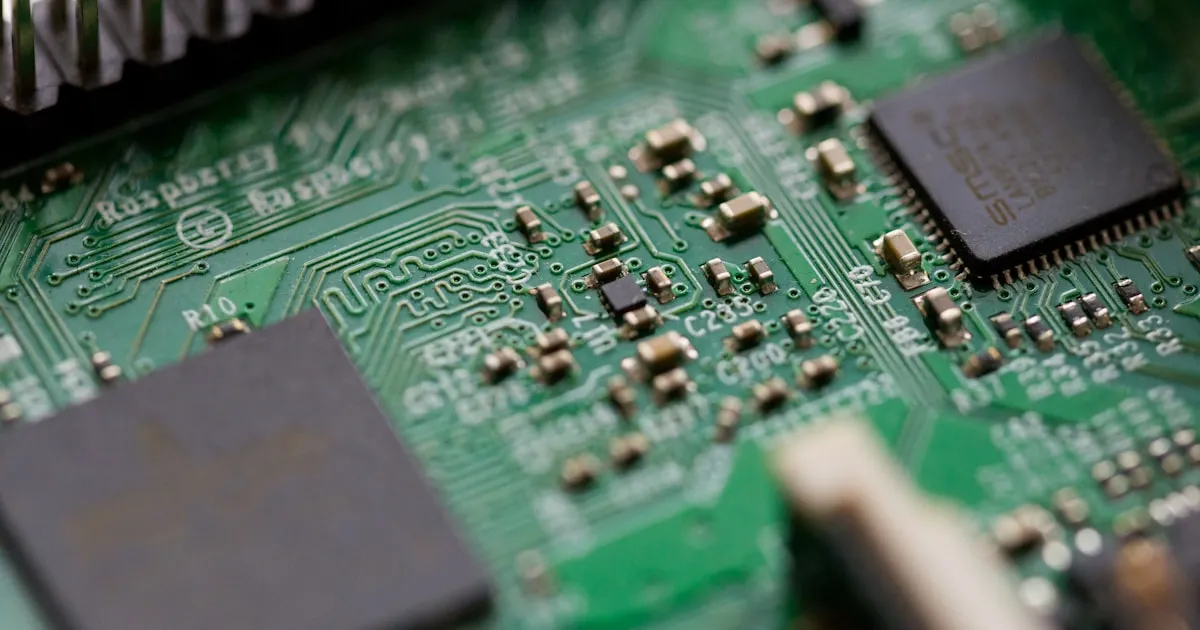
Image: Nicolas Thomas via Unsplash
About AtlasPCB — We specialize in complex PCB manufacturing for HDI, RF, and high-reliability applications. Explore our PCB prototype manufacturing from 1 piece . Every order includes free engineering review. Get your quote.
Reviewed by AtlasPCB Engineering Team — IPC-certified manufacturing specialists with 15+ years of production experience in HDI, RF, and high-reliability PCB fabrication. Content based on factory floor data and real customer design reviews.
- news
- prototyping
- PCB innovation
- startup
- hardware testing
- liquid metal
- rapid iteration
- EaaS