· David Okafor · News · 4 min read
Itera Raises $12M for Fluid Circuit Board
Deep tech startup Itera emerges from stealth with the world's first fluid circuit board — a glass and liquid metal platform that lets engineers reconfigure circuits in under a minute, eliminating weeks-long PCB prototyping cycles.
Itera Emerges from Stealth with $12M and a Radical Prototyping Platform
Itera, a deep tech startup, has emerged from stealth mode with a prototype of what it describes as the world’s first fluid circuit board — a platform enabling engineers to test and modify electronic designs instantly with real components. The company has simultaneously raised $12 million in seed funding from Upfront Ventures, Costanoa Ventures, and Colle Capital Partners.
The technology is designed to fundamentally replace the traditional PCB prototyping cycle, where each design change typically takes 2 to 6 weeks to fabricate and test.
Source: PCB Directory (May 29, 2026)
How It Works: Glass, Liquid Metal, and Instant Reconfiguration
Itera’s platform uses a system based on glass substrate and liquid metal interconnects that lets engineers reconfigure circuits in under a minute. The key differentiators from traditional prototyping:
Real-time iteration: Engineers upload designs, test with real components, make changes, and retest immediately — from anywhere. What was a sequential multi-week process becomes a continuous workflow.
Real components, real behavior: Unlike pure simulation, Itera’s system works with physical components experiencing actual electrical behavior. Engineers can probe any point in the circuit for deep visibility — something not possible with standard PCB prototypes where test points must be designed in advance.
Remote operation: Designs are assembled at secure US-based facilities using customer-specified components, where they can be tested and refined remotely until ready for manufacturing.
Why This Matters for the PCB Industry
The traditional hardware development cycle is well-understood but painfully slow:
- Design schematic and layout (days to weeks)
- Generate Gerber files and order PCB (1-5 days for quick-turn)
- Wait for fabrication (1-7 days domestic, 2-3 weeks for standard)
- Receive boards and assemble components (1-3 days)
- Test, find problems (hours to days)
- Return to step 1 for the next iteration
This cycle means each design change costs $500-$5,000 and 2-6 weeks, depending on board complexity. Most products go through 3-8 prototype iterations before production. Itera claims to compress this loop to minutes rather than weeks.
“Software developers have been able to write code, test, and iterate in real time for decades. Itera makes real-time design and iteration possible for hardware, too,” said AJ Cooper, CEO and Co-founder. “Hardware has always been hard because it is permanent. Changing it requires time and money. Itera is making hardware easy.”
Business Model: Electronics-as-a-Service
Itera operates on an Electronics-as-a-Service model, which means:
- Customers don’t purchase the fluid circuit board hardware
- Designs are assembled using customer-specified components at Itera facilities
- Testing and refinement happen remotely
- Final validated designs are then sent to traditional PCB manufacturers for production
This model positions Itera as a complement to — not a replacement for — PCB fabrication. Once a design is validated on Itera’s platform, it still needs to be manufactured as a traditional rigid or flex PCB for production deployment.
Market Demand and Early Adoption
Initial production capacity has already been reserved by:
- A top global automotive manufacturer
- Multiple defense startups
- Large technology and semiconductor firms (in evaluation phase)
These early adopters share a common challenge: complex multi-layer designs where each iteration costs tens of thousands of dollars and weeks of schedule time. Automotive and defense electronics are particularly sensitive to development timeline compression due to regulatory qualification requirements.
Industry Perspective: Complements Quick-Turn PCB Manufacturing
Itera’s technology addresses the validation phase of hardware development — confirming that a circuit topology works before committing to PCB fabrication. For production manufacturing, traditional PCB fabrication remains essential:
- Signal integrity: Fluid interconnects cannot replicate controlled-impedance transmission lines at multi-GHz frequencies
- Power handling: Production power planes and copper pours carry far more current than reconfigurable traces
- Environmental qualification: Final products must survive temperature, vibration, and humidity testing on production PCBs
- Volume manufacturing: PCB fabrication scales to millions of units; Itera targets the 1-100 prototype quantity range
AtlasPCB provides quick-turn PCB prototyping with as-fast-as 24-hour fabrication for domestic orders. When your validated design is ready for production-quality boards, our engineering team ensures DFM optimization and full capabilities for your transition from prototype to volume.
Further Reading
- PCB Panelization and Depaneling: V-Score, Tab Routing, and DFM
- PCB Design for Testability: DFT, Test Points, and ICT
- PCB Gerber Files: Complete Output Guide
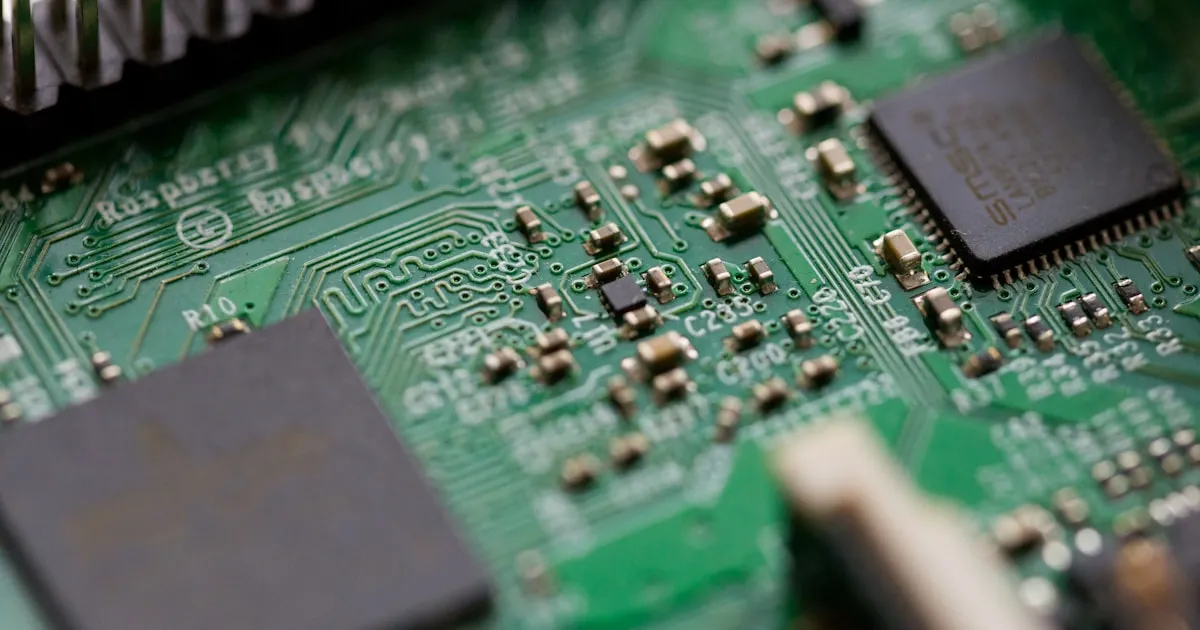
Image: Umberto via Unsplash
About AtlasPCB — We specialize in complex PCB manufacturing for HDI, RF, and high-reliability applications. Explore our PCB prototype manufacturing from 1 piece . Every order includes free engineering review. Get your quote.
Reviewed by AtlasPCB Engineering Team — IPC-certified manufacturing specialists with 15+ years of production experience in HDI, RF, and high-reliability PCB fabrication. Content based on factory floor data and real customer design reviews.
- news
- PCB prototyping
- hardware testing
- startup funding
- electronics innovation
- rapid prototyping