· AtlasPCB Engineering Team · News · 4 min read
Infineon Launches 2300V CoolSiC MOSFET Power
Infineon expands XHP 2 power module range with 2300V SiC MOSFETs supporting 1500V DC-link voltages for wind, solar, and battery storage converters — achieving 300 kW/L power density in demo systems.
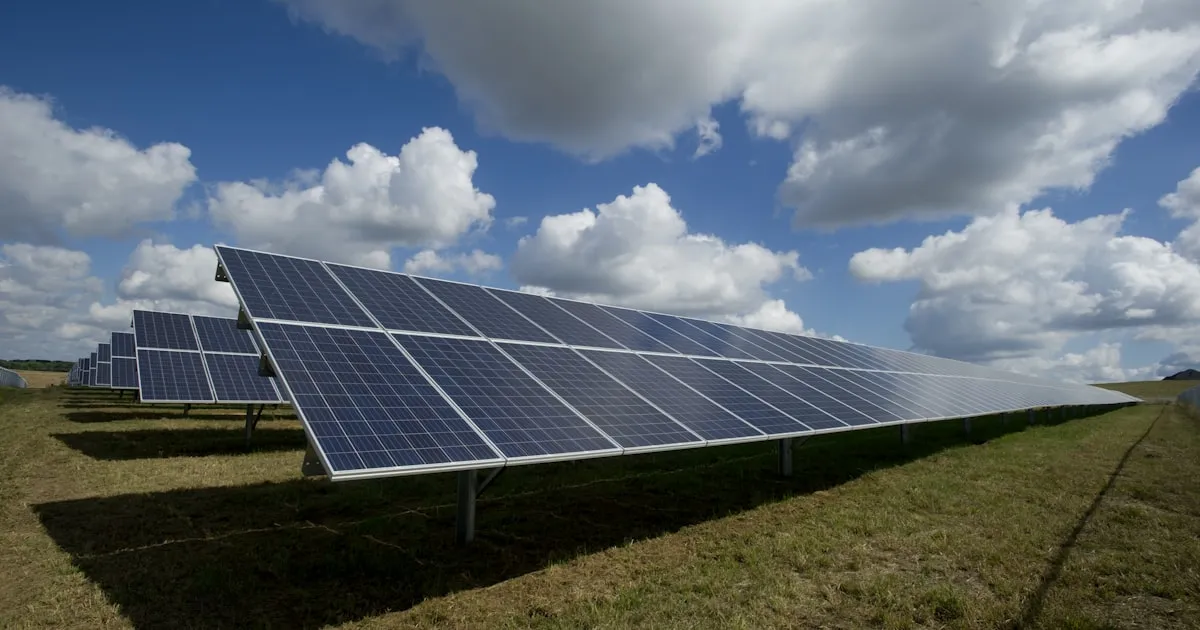
Infineon Technologies announced on May 15, 2026, the expansion of its XHP 2 power module platform with new 2300V CoolSiC MOSFET variants specifically designed for high-voltage renewable energy applications. The modules support DC-link voltages up to 1500V, reflecting the industry’s accelerating shift toward higher system voltages in wind turbines, utility-scale photovoltaic inverters, and grid-scale battery energy storage systems (BESS).
The announcement signals a significant step in the ongoing transition from silicon IGBT-based power converters to silicon carbide (SiC) MOSFET architectures across the energy infrastructure sector.
Technical Specifications
The new XHP 2 CoolSiC MOSFET modules offer several key specifications:
- Blocking voltage: 2300V — designed for 1500V DC-link operation with safety margin
- On-resistance (R_DS(on)): Available from 1 mΩ to 2 mΩ across the module variants
- Isolation voltage: 4 kV or 6 kV variants available
- Interconnection technology: Infineon .XT bonding for enhanced reliability and thermal cycling capability
- Thermal interface: Pre-applied TIM (thermal interface material) option for simplified assembly
- Switching behavior: Symmetrical turn-on/turn-off characteristics for easier paralleling in high-power converters
Demonstrated Performance
Infineon reported specific system-level results from demonstration applications:
- Wind power converter: Achieved power density of 300 kW/L using the 2300V CoolSiC modules
- Battery storage system: Semiconductor losses measured at less than 0.7% of output power
- Switching frequency: Higher operating frequencies possible compared to equivalent Si IGBT modules, enabling smaller passive components (inductors, capacitors, EMI filters)
Why This Matters for Power PCB Design
The transition to 2300V SiC modules has direct implications for the PCB and power electronics design community:
Higher voltage clearances: PCB designs for 1500V DC-link systems require significantly wider creepage and clearance distances compared to traditional 800V or 1000V systems. IPC-2221B specifies minimum clearances of 6.4mm for 1500V DC at sea level in uncoated assemblies. Board designers must account for these distances in layout, potentially requiring larger PCBs or more creative routing strategies.
Thermal management: While SiC’s lower switching losses reduce total heat generation, the remaining heat must still be extracted efficiently. The pre-applied TIM option simplifies module-to-heatsink assembly, but the PCB gate driver board still needs careful thermal design. Power PCB fabrication using heavy copper (3–6 oz) construction and [thermal via arrays]/blog/pcb-thermal-via-design/) becomes essential for the gate driver and control circuitry adjacent to these modules.
EMI considerations: SiC MOSFETs switch faster than Si IGBTs (dV/dt rates of 10–50 V/ns), generating higher-frequency EMI. The PCB layout for gate driver circuits must minimize loop inductance, use dedicated return paths, and potentially incorporate [EMI shielding strategies]/blog/pcb-emi-shielding-via-fencing-board-level-shield/) to pass regulatory emissions standards.
Paralleling requirements: The symmetrical switching behavior highlighted by Infineon is critical for applications that parallel multiple modules for higher power ratings. Matched gate driver PCBs with equal trace lengths and balanced coupling become important design constraints. Any mismatch in gate drive timing leads to unequal current sharing and potential module failure.
The 1500V System Voltage Trend
The energy industry’s migration to 1500V DC-link systems has been accelerating:
- Solar: Most new utility-scale PV installations now use 1500V string inverters (up from 1000V legacy systems), reducing cable losses and BOS (balance of system) costs
- Wind: Next-generation offshore wind turbines (15 MW+ class) are increasingly adopting 1500V+ DC bus architectures
- BESS: Grid-scale battery storage is transitioning to higher voltage stacks to improve round-trip efficiency
This trend creates sustained demand for PCBs designed to handle higher voltages, including thicker substrates, wider spacing, and materials with higher CTI (Comparative Tracking Index) values.
Available Modules
The initial product lineup includes four variants:
- FF1000UXTR23T2M1 (1 mΩ, standard TIM)
- FF1300UXTR23T2M1 (1.3 mΩ)
- FF2000UXTR23T2M1 (2 mΩ)
- FF1000UXTR23T2M1_B5 (1 mΩ, 6 kV isolation)
All modules are available now through Infineon and its distribution network.
For PCB designers working on power converter control boards, the introduction of higher-voltage SiC modules means updating design rules for creepage/clearance, reviewing [stackup designs for power integrity]/blog/pcb-power-plane-design-split-planes-pdn-analysis/), and ensuring thermal management strategies match the power densities these modules enable.
Source: eeNews Europe (May 15, 2026), Infineon Technologies
Image: American Public Power Association via Unsplash
About AtlasPCB — We specialize in complex PCB manufacturing for HDI, RF, and high-reliability applications. Explore our heavy copper PCB manufacturing . Every order includes free engineering review. Get your quote.
Reviewed by AtlasPCB Engineering Team — IPC-certified manufacturing specialists with 15+ years of production experience in HDI, RF, and high-reliability PCB fabrication. Content based on factory floor data and real customer design reviews.
- news
- Infineon
- SiC
- power modules
- renewable energy
- power electronics
- PCB design