· AtlasPCB Engineering Team · News · 4 min read
Global Semiconductor Sales Hit $298.5 Billion in Q1 2026 — Industry on Track for $1 Trillion Year
SIA reports worldwide chip sales surged 25% quarter-over-quarter to $298.5B in Q1 2026, with March alone reaching $99.5B — a 79.2% year-over-year increase signaling unprecedented demand for PCB substrates and advanced packaging.
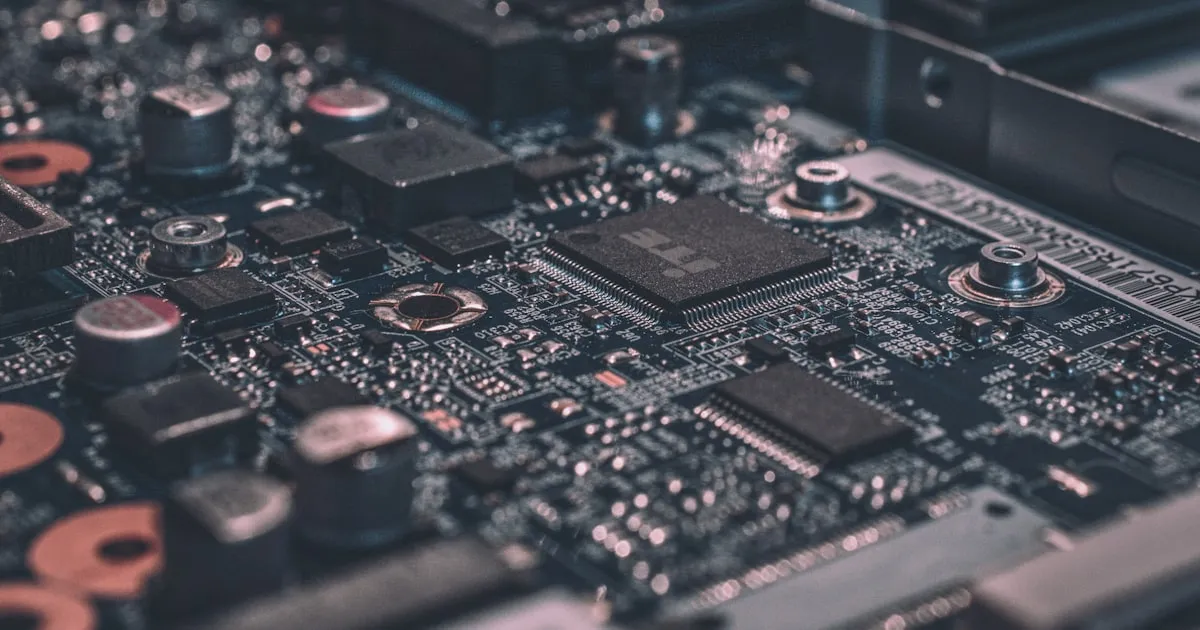
The semiconductor industry just posted numbers that confirm what PCB manufacturers have been feeling on their production floors: demand is absolutely exploding. The Semiconductor Industry Association (SIA) reported on May 4, 2026 that global semiconductor sales reached $298.5 billion in Q1 2026 — a staggering 25% increase over Q4 2025 and firmly on pace to make 2026 the first trillion-dollar year in chip history.
Source: Semiconductor Industry Association, May 4, 2026
The Numbers Behind the Boom
March 2026 alone saw $99.5 billion in semiconductor sales — a 79.2% year-over-year increase from March 2025’s $55.5 billion, and 11.5% more than February 2026. These figures, compiled by the World Semiconductor Trade Statistics (WSTS) organization, represent three-month moving averages across the entire global industry.
“Global chip sales remain on track to reach $1 trillion in 2026, with Q1 sales significantly exceeding sales in Q4 2025,” said John Neuffer, SIA president and CEO. “Strong sales across the Asia Pacific region, the Americas, and China drove global semiconductor market growth.”
Regional Breakdown (Year-over-Year, March 2026)
| Region | YoY Growth |
|---|---|
| Asia Pacific/All Other | +108.5% |
| Americas | +83.1% |
| China | +74.8% |
| Europe | +46.5% |
| Japan | +7.4% |
The Asia Pacific region’s 108.5% growth is particularly striking — driven by AI data center buildouts across Taiwan, South Korea, and Singapore that require massive volumes of advanced IC substrates, high-layer-count PCBs, and HDI boards.
What This Means for PCB Manufacturing
Every semiconductor sold needs a PCB to live on. The trillion-dollar semiconductor market directly translates to unprecedented demand across the PCB supply chain:
Advanced Substrate Demand
High-performance AI chips (GPUs, TPUs, custom ASICs) require ABF substrates and advanced organic interposers that are already in shortage. The current FC-BGA substrate market is operating at 95%+ utilization rates, with lead times stretching to 20+ weeks for cutting-edge specifications.
HDI and High-Layer-Count Growth
AI server motherboards routinely require 20-30 layer PCBs with HDI technology. The growth in data center infrastructure means:
- HDI PCB demand is growing 15-20% annually
- High-speed material consumption (Megtron 6/7, Tachyon) is outpacing supply
- Via-in-pad and any-layer HDI specifications are becoming standard rather than premium
Signal Integrity Requirements
With AI processors moving to 112 Gbps PAM4 and preparing for 224 Gbps signaling, PCBs must deliver:
- Controlled impedance tolerance of ±5% or tighter
- Ultra-low-loss dielectric materials (Dk < 3.2, Df < 0.002)
- Precise trace geometry with smooth copper foils (VLP or HVLP)
Power Delivery Challenges
Modern AI accelerators consume 700-1500W per package. PCB power planes must handle:
- High-current copper fills (2oz+ inner layers)
- Embedded capacitance for PDN decoupling
- Thermal management integration (thermal vias, metal-core substrates)
Historical Context: The Road to $1 Trillion
To appreciate the magnitude of this moment, consider the semiconductor industry’s growth trajectory:
- 2019: $412 billion (pre-pandemic baseline)
- 2021: $556 billion (pandemic demand spike)
- 2023: $527 billion (inventory correction year)
- 2024: $627 billion (recovery and AI ramp)
- 2025: $870 billion (AI data center buildout)
- 2026: On pace for $1.0-1.1 trillion (AI scaling + automotive + IoT convergence)
The growth isn’t just AI — though AI accounts for roughly 35-40% of the incremental demand. Automotive electrification, industrial IoT, 5G/6G infrastructure, and consumer electronics refresh cycles are all contributing to what appears to be a sustained super-cycle rather than a temporary spike.
PCB Market Correlation
The global PCB market is expected to reach $95.8 billion in 2026 (per Prismark estimates), representing approximately 10% of semiconductor value. This ratio has remained remarkably stable over decades — when chips grow, PCBs grow proportionally. The trillion-dollar chip market implies continued double-digit PCB demand growth through at least 2028.
AtlasPCB’s Position in the Trillion-Dollar Ecosystem
As semiconductor volumes surge, PCB manufacturers who can deliver precision, speed, and technical capability will capture disproportionate value. AtlasPCB specializes in exactly the applications driving this boom:
- HDI PCBs with microvia technology for IC substrate-adjacent applications
- High-layer-count boards (up to 40+ layers) for AI server infrastructure
- Impedance-controlled designs with ultra-low-loss materials
- Quick-turn prototyping for hardware teams racing to market
The trillion-dollar semiconductor year isn’t just a headline — it’s a structural shift that will sustain PCB demand growth well beyond 2026.
Need PCB manufacturing that keeps pace with the semiconductor boom? Get a quote from AtlasPCB — we specialize in the high-performance boards that AI and advanced computing demand.
About AtlasPCB — We specialize in complex PCB manufacturing for HDI, RF, and high-reliability applications. Explore our impedance-controlled PCB manufacturing . Every order includes free engineering review. Get your quote.
Reviewed by AtlasPCB Engineering Team — IPC-certified manufacturing specialists with 15+ years of production experience in HDI, RF, and high-reliability PCB fabrication. Content based on factory floor data and real customer design reviews.
- industry news
- semiconductor sales
- SIA
- PCB demand
- advanced packaging
- electronics market
- supply chain