· David Okafor · News · 5 min read
Focus on PCB 2026
Europe's premier PCB trade show showcases AI-driven SMT inspection, automated defect monitoring for 3D-printed electronics, and intelligent quoting systems transforming factory operations.
Europe’s PCB Industry Confronts AI Transformation Head-On
The fifth edition of Focus on PCB — From Design to Assembly, Europe’s reference trade show for the printed circuit board industry, opened its conference programme on May 7, 2026 with a clear message: artificial intelligence is no longer a future promise for electronics manufacturing — it is a present-tense operational reality reshaping everything from inspection throughput to procurement strategy.
Held in Italy and organized in collaboration with EIPC (European Institute of Printed Circuits), this year’s event brought together designers, manufacturers, and assembly professionals around two days of technical sessions tackling the industry’s most pressing challenges: AI deployment on the factory floor, global supply chain rebalancing, and the industrial policies Europe needs to maintain competitiveness.
Supply Chain Intelligence: Data-Driven Procurement
The conference opened with a keynote session curated by Assodel, the Italian association of electronic components distributors. Director Diego Giordani, alongside PCB Group Coordinator Luca Giovelli and EMS Group Coordinator Alberto Maggi, presented data from the Assodel Observatory covering component shortages, price trends, and shifting dynamics within the European electronics supply chain.
The data paints a picture of a supply chain in transition. Raw material costs — particularly copper, resin systems, and glass fabric — continue their upward trajectory, driven by AI-server demand for advanced substrates and geopolitical supply diversification away from single-source dependencies. European PCB fabricators are reporting lead times extending by 15-25% compared to the same period in 2025, with high-layer-count and HDI boards experiencing the most acute capacity pressure.
For procurement teams, the message was pragmatic: the era of just-in-time, spot-buying strategies is giving way to longer-term supplier partnerships and strategic buffer stock management. Those who wait for prices to stabilize may find capacity simply unavailable.
Five AI Deployments Already in Production
The afternoon session — titled “Algorithms in Production: Industry Enters the Age of Intelligent Agents” — showcased five organizations that have moved beyond pilot programs into production AI deployment:
BI-REX: Automated Defect Monitoring for Additive Electronics
The Bologna-based competence center presented an automated defect monitoring system specifically designed for 3D-printed electronic circuits. As additive manufacturing methods mature for producing circuit boards (conductive ink printing, aerosol jet deposition), traditional inspection methods struggle with the unique defect signatures these processes produce. BI-REX’s system uses computer vision trained on additive-specific failure modes — ink spreading, via misalignment, conductivity variation — to enable real-time process control that would be impossible with human inspectors.
TTLab: Multi-Agent Architectures in Industrial Software
TTLab shared its experience implementing multi-agent AI architectures in manufacturing software development. The presentation focused on how multiple specialized AI agents — each handling a specific domain (scheduling, quality, logistics) — collaborate autonomously while a human project lead provides strategic direction. This mirrors the broader trend of “agent-as-coworker” rather than “AI-as-tool,” with the developer’s role evolving from programmer to orchestrator.
CEFRIEL: From AI Strategy to Factory Operations
Milan’s CEFRIEL addressed the gap between corporate AI strategy and operational deployment — a chasm that many manufacturers find wider than expected. Their framework covers governance, data infrastructure, change management, and the critical first 90 days of AI deployment in a factory environment.
SAKI Europe: AI-Enhanced SMT Inspection
Perhaps the most directly relevant for PCB assemblers, SAKI Europe demonstrated how AI is transforming surface-mount technology (SMT) inspection of PCBs. Their presentation showed concrete metrics: inspection speed improvements of 30-50% while simultaneously reducing false call rates by up to 60%. The AI system learns component variability and distinguishes between cosmetic variations (acceptable) and functional defects (reject), a distinction that traditional rule-based AOI systems handle poorly.
For high-mix, low-volume EMS providers — the backbone of European electronics manufacturing — this capability is transformative. Programming inspection recipes for every new product variant is the biggest time sink in AOI operations. AI-based systems can generalize across similar components, dramatically reducing setup time.
Luminovo: Intelligent PCBA Quoting
German software company Luminovo presented how AI is reshaping PCBA quoting processes specifically for Italian and European EMS providers. Their system automates Bill of Materials (BOM) analysis, identifies component availability risks, suggests alternative parts, and generates accurate quotes in minutes rather than hours — addressing the industry reality that manual quoting is becoming unsustainable as product complexity grows and customer expectations for rapid response tighten.
European Industrial Policy: The Missing Layer
The second day of conferences focused on what European PCB manufacturers need from policymakers to remain globally competitive. With the EU Chips Act directing billions toward semiconductor fabrication, attendees noted that PCB and substrate manufacturing — equally critical infrastructure for electronics sovereignty — receives a fraction of the policy attention.
European PCB production capacity has declined steadily since the 2000s, with Asia now commanding over 90% of global output. The remaining European fabricators serve defense, aerospace, automotive, and medical markets where proximity, IP protection, and quality requirements justify higher costs. But even these niches face pressure as Asian manufacturers move upmarket.
What This Means for Hardware Engineers
The Focus on PCB 2026 conference signals several trends relevant to PCB designers and procurement teams:
- AI inspection reduces escape rates — specify AOI/SPI requirements in your PCBA contracts, as AI-enhanced systems now catch defects that human reviewers miss
- Quoting speed is competitive advantage — EMS providers adopting AI quoting can respond to RFQs faster, compressing development timelines
- Supply chain planning horizons are extending — book capacity and materials further in advance, especially for advanced constructions
- Additive manufacturing quality is maturing — 3D-printed electronics may become viable for prototyping and low-volume production sooner than expected
At AtlasPCB, we have integrated AI-assisted inspection into our SMT assembly lines, using machine learning to continuously improve defect detection accuracy while maintaining the throughput our customers’ delivery schedules demand.
Source: EIPC — Focus on PCB 2026 Conference Programme, May 7, 2026
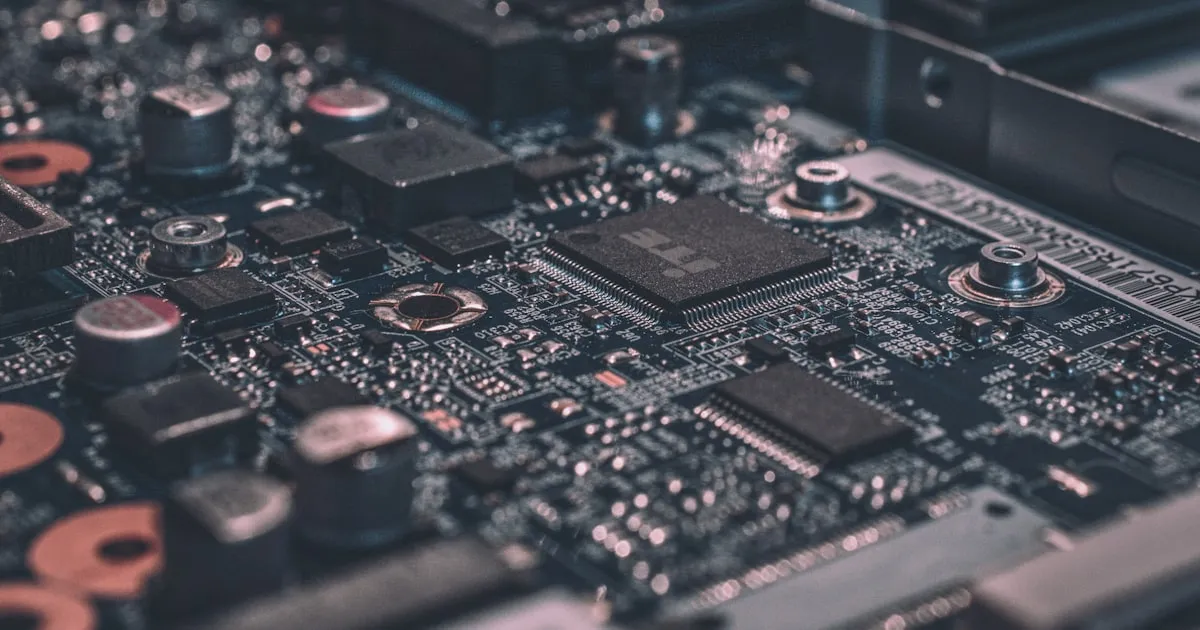
Image: Alexandre Debiève via Unsplash
About AtlasPCB — We specialize in complex PCB manufacturing for HDI, RF, and high-reliability applications. Explore our full PCB manufacturing capabilities, or get an instant online quote . Every order includes free engineering review. Get your quote.
Reviewed by AtlasPCB Engineering Team — IPC-certified manufacturing specialists with 15+ years of production experience in HDI, RF, and high-reliability PCB fabrication. Content based on factory floor data and real customer design reviews.
- news
- ai-manufacturing
- pcb-inspection
- europe
- industry-events