· Thomas Webb · News · 4 min read
ECTC 2026: Applied Materials Demonstrates 450nm
IEEE ECTC 2026 in Orlando showcases breakthrough packaging technologies for AI chips. Applied Materials achieves 98% yield across 20 million Cu-Cu hybrid bonds at 450nm pitch, KIOXIA advances 3D flash memory stacking, and AIST demonstrates 6.4 Tbps optical substrate for co-packaged optics.
ECTC 2026 Highlights Packaging Breakthroughs for AI Era
The 76th IEEE Electronic Components and Technology Conference (ECTC), running May 26-29 at the JW Marriott & Ritz-Carlton Grande Lakes Resort in Orlando, Florida, brings together over 2,000 scientists and engineers to present the latest advances in semiconductor packaging, components, and microelectronic systems.
This year’s technical program heavily reflects the AI industry’s insatiable demand for more advanced packaging — from ultra-fine pitch hybrid bonding for memory stacking to optical interconnects replacing electrical traces for data center bandwidth. Each advance has direct implications for the PCB substrates and boards that support these packages.
Applied Materials: 450nm Pitch Cu-Cu Hybrid Bonding
Applied Materials will present what may be the conference’s most significant result: a demonstration of 450nm pitch copper hybrid bonding achieving 98% yield across 20 million via interconnects.
Technical Details
- Pitch: 450nm — approximately 10× finer than current production hybrid bonding (4-5µm pitch)
- Yield: 98% across 20 million interconnects per wafer pair
- Application: Wafer-to-wafer hybrid bonding for next-generation CMOS-bonded-to-array (CBA) memory architectures
- Key innovation: Identification and resolution of open defects caused by thin carbon-rich layers at Cu-Cu bond interfaces using Electron Beam Absorbed Current analysis and TEM-EELS characterization
Process Optimizations
The paper details four critical process steps:
- Metallization — Optimized copper seed and fill for sub-micron via structures
- Chemical Mechanical Polishing (CMP) — Achieving sub-nanometer surface roughness
- Plasma treatments — Surface activation for bond strength
- Post-bond annealing — Driving copper interdiffusion across the bond interface
Implications for PCB Substrates
As memory architectures stack more layers with finer interconnects, the mechanical stress on the package-to-substrate interface intensifies. High-bandwidth memory (HBM) stacks already reach 12-16 layers; 450nm pitch bonding enables 32+ layer stacks with dramatically higher bandwidth. PCB substrates supporting these packages must provide:
- Flatter mounting surfaces (warpage <50µm over package footprint)
- More robust underfill support (thermal cycling protection)
- Higher via density for signal escape routing from HBM controllers
KIOXIA: Wafer-to-Wafer Cu Bonding for 3D Flash Memory
KIOXIA will present advances in wafer-to-wafer Cu direct bonding for multi-stacked CMOS directly bonded to array (CBA) structures in 3D flash memory. The paper introduces a misalignment correction technique for highly warped wafers — a critical manufacturing challenge as 3D NAND stacks exceed 200 layers.
The research addresses:
- Bonding yield for wafers with >100µm warpage
- Electromigration resistance of Cu-Cu bonds under memory operating conditions
- Stress-induced voiding prevention in multi-stack configurations
For PCB designers, the trend toward bonded 3D memory (vs. traditional TSV stacking) means memory packages will have different thermal profiles and mechanical behavior, requiring substrate design adaptation.
ASML: Die-to-Wafer Hybrid Bonding Overlay Optimization
ASML presented methods to optimize hybrid bonding overlay in die-to-wafer (D2W) bonding processes — the assembly method used for chiplet architectures (AMD EPYC, Intel Clearwater Forest). Using high-precision grid measurements, the research evaluates:
- Reticle writing correction
- Scanner-based precorrection
- Film stress compensation
The result: less than 80nm bonding overlay performance across heterogeneous dies — enabling reliable chiplet assembly at production scale.
AIST: 6.4 Tbps Optical Substrate for Co-Packaged Optics
Japan’s National Institute of Advanced Industrial Science and Technology (AIST) will present an active optical package substrate integrating:
- Silicon photonic transceiver chips
- Micromirrors for optical path routing
- Polymer optical redistribution layers (RDL)
The demonstration sample supports 112 Gbps PAM4 transmission per channel with estimated aggregate capacity of 6.4 Tbps per substrate.
PCB Integration Implications
Co-packaged optics (CPO) requires PCB substrates that:
- Accommodate optical fiber attachment at board edge or through-board vias
- Maintain extreme planarity for optical alignment (±5µm)
- Provide thermal management for photonic transceiver power dissipation
- Support high-speed electrical traces (112G PAM4) alongside optical paths
This represents a fundamental shift in PCB substrate design from purely electrical to electro-optical hybrid systems.
Indium Corporation: sTIMs for AI Thermal Challenges
Separately, Indium Corporation’s Kyle Aserian will present research on indium-based solder thermal interface materials (sTIMs) using fluxless vacuum formic acid reflow for large-area BGA packages. The 86 W/mK thermal conductivity of indium sTIMs addresses the extreme thermal dissipation requirements of next-generation AI processors exceeding 700W TDP.
The Big Picture: Packaging Drives Substrate Complexity
ECTC 2026’s technical program reveals a clear trend: advanced packaging innovations are outpacing the substrate technologies that support them. As hybrid bonding reaches 450nm pitch, as optical interconnects reach 6.4 Tbps, and as thermal loads exceed 1000W, PCB substrate manufacturers must rapidly evolve capabilities in:
- Surface planarity: Sub-20µm warpage for hybrid bonded packages
- Via density: >5000 vias/cm² for signal and power escape
- Material systems: Low-CTE glass core and silicon interposers
- Thermal solutions: Integrated cooling channels and sTIM-compatible surfaces
- Mixed technology: Electrical + optical + thermal pathways in single substrate
The companies that solve these substrate challenges will capture the highest-value segment of the PCB market — one projected to grow at 20-30% annually through the decade.
Source: IEEE ECTC 2026 Technical Program (May 26-29, 2026, Orlando, FL); PCB Directory (May 2026)
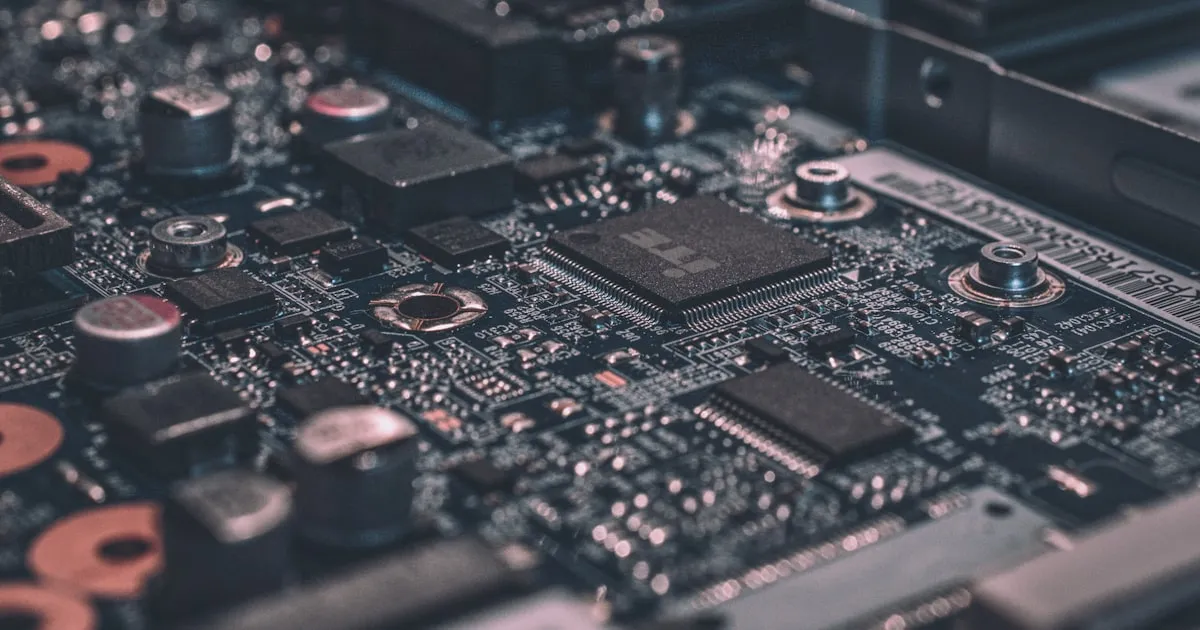
Image: Photo by Vishnu Mohanan via Unsplash
AtlasPCB manufactures high-density PCB substrates supporting advanced packaging applications. From fine-pitch BGA escape routing to thermal via arrays for high-power packages, our engineering team collaborates with packaging designers for optimal substrate solutions. Explore our capabilities →
About AtlasPCB — We specialize in complex PCB manufacturing for HDI, RF, and high-reliability applications. Explore our full PCB manufacturing capabilities, or get an instant online quote . Every order includes free engineering review. Get your quote.
Reviewed by AtlasPCB Engineering Team — IPC-certified manufacturing specialists with 15+ years of production experience in HDI, RF, and high-reliability PCB fabrication. Content based on factory floor data and real customer design reviews.
- news
- AI hardware
- advanced packaging
- hybrid bonding
- ECTC
- PCB substrate
- co-packaged optics