· AtlasPCB Engineering Team · News · 4 min read
Chinese-Made PCBs Under AI Chips Raise National
CNBC investigation reveals 60% of global PCBs are made in China — including substrates beneath Nvidia AI accelerators — prompting the U.S. Defense Department to mandate domestic sourcing and Congress to introduce PCB manufacturing incentive legislation amid capacity shortfalls and 40% price surges.

The Hidden Vulnerability Beneath AI Chips
A CNBC investigation published June 3 has brought renewed attention to a critical vulnerability in the AI hardware supply chain: the printed circuit boards sitting beneath virtually every AI accelerator chip are overwhelmingly manufactured in China — a country that the U.S. intelligence community considers a strategic adversary.
The report highlights that U.S. domestic PCB production has collapsed from 30% of global supply to just 4% over the past two decades, according to the Printed Circuit Board Association of America (PCBAA). Today, six out of ten PCBs worldwide are manufactured in mainland China, which PCBAA executive director David Schild describes as a “risky dependency.”
National Security Implications
“Chips, substrates, PCBs represent multiple avenues of attack for a potential malicious actor,” said Mike Cadenazzi, U.S. assistant secretary of war for industrial base policy, in an interview with CNBC. He warned that a compromised PCB could mean a “missile malfunctions in flight.”
Former U.S. deputy under secretary of defense Al Shaffer, who helped make technology acquisition decisions in the Obama administration and Trump’s first term, called PCBs the “easiest place to disrupt an electronics chain” due to the ability to hide malicious components within substrates and internal layers.
The multi-layer construction of advanced PCBs — often 20+ layers for AI server applications — makes inspection and verification of every internal connection practically impossible without destructive testing.
Government Response: Subsidies and Legislation
The U.S. government is responding on multiple fronts:
- Defense Department mandate: DoD now requires most PCB purchases to come from domestic sources, putting enormous pressure on the limited number of qualified U.S. fabricators
- Congressional legislation: Both chambers have introduced bills providing financial incentives for building and buying American-made PCBs
- Export control considerations: The Trump administration has accused Chinese entities of “industrial-scale campaigns” to steal U.S. AI systems and is exploring accountability measures
These initiatives coincide with the broader U.S.-China AI supremacy competition and the ongoing reshoring push across semiconductor and electronics manufacturing.
Industry Under Strain
Only two publicly traded companies manufacture PCBs in the U.S. at scale: TTM Technologies (TTMI) and Sanmina (SANM). Both are experiencing extraordinary demand:
- TTM Technologies: Stock up nearly 500% in the past year; expanding domestic capacity with new facilities
- Sanmina: Stock tripled; struggling to balance military and commercial demand
“We are competing with the AI demand,” said Cathie Gridley, an executive vice president at TTM Technologies. “The commercial side is willing to pay a much higher price to get access to that capacity, and so what that does is that really drives prices up across the board.”
TTM has announced price increases of 5–25% — a direct consequence of capacity constraints.
Price Surge: 40% Increase in Two Months
PCB prices rose by up to 40% from March to April 2026 alone, according to a Goldman Sachs note cited by Reuters. Multiple factors contribute:
- AI demand explosion: Hyperscaler data center builds consuming high-end PCB capacity
- Middle East conflict: Iran War disrupting copper and resin supply chains (Nvidia supplier Victory Giant warned of cost impacts)
- Domestic capacity limits: U.S. factories at maximum utilization with 12–16 week lead times
- Reshoring premium: Security-cleared domestic production carries inherent cost overhead
The Supply Chain Paradox
The situation presents a paradox: the U.S. is trying to reduce reliance on Chinese PCBs for national security, while simultaneously experiencing unprecedented demand for exactly the type of advanced PCBs that China dominates:
- AI server PCBs (20–30 layers, ultra-low-loss materials)
- Advanced HDI substrates for chip packaging
- High-density interconnect boards for military radar and communications
Building domestic capacity takes 2–3 years minimum for new fabrication facilities, while demand is growing now. The gap between security requirements and manufacturing reality is widening.
Global Supply Chain Implications
For international PCB buyers, the U.S. security push creates secondary effects:
- Capacity reallocation: U.S. fabricators prioritizing defense contracts may reduce availability for commercial customers
- Alternative sourcing: Increased interest in Taiwan, South Korea, Japan, and Southeast Asian fabricators as alternatives to both U.S. (expensive) and China (restricted)
- Dual qualification: OEMs qualifying multiple fabricators across different regions to manage geopolitical risk
- Price transparency: The 40% price surge affects all buyers, not just defense — commercial customers face passed-through costs
AtlasPCB Analysis
This geopolitical shift creates both challenges and opportunities for the PCB industry. The fundamental message is clear: PCB supply chain diversification is no longer just a cost optimization strategy — it’s a risk management imperative.
For customers concerned about supply security, geographic diversification of fabrication partnerships is essential. The era of relying on a single-region supply chain is ending.
Source: CNBC, “Hidden beneath AI chips, Chinese-made circuit boards raise national security concerns in U.S.” Published June 3, 2026.
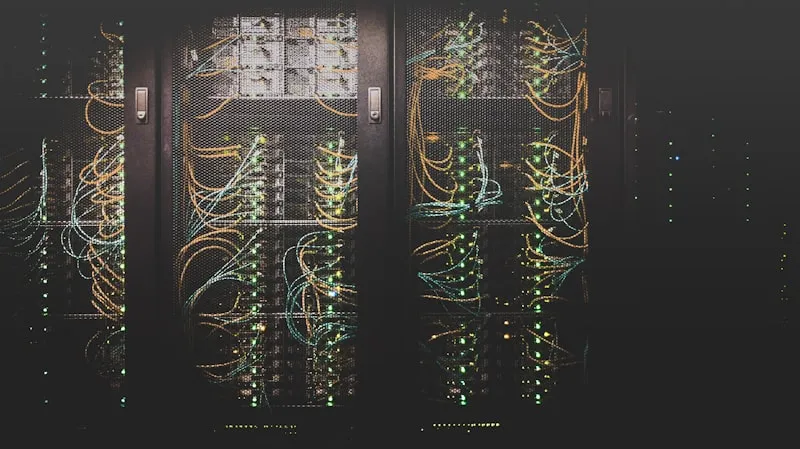
Image: Israel Andrade via Unsplash
AtlasPCB provides supply chain diversification for companies requiring geopolitically resilient PCB sourcing. Request a consultation about our multi-region fabrication network.
About AtlasPCB — We specialize in complex PCB manufacturing for HDI, RF, and high-reliability applications. Explore our full PCB manufacturing capabilities . Every order includes free engineering review. Get your quote.
Reviewed by AtlasPCB Engineering Team — IPC-certified manufacturing specialists with 15+ years of production experience in HDI, RF, and high-reliability PCB fabrication. Content based on factory floor data and real customer design reviews.
- news
- AI PCB
- national security
- reshoring
- PCB manufacturing
- US defense
- supply chain
- TTM Technologies
- Nvidia