· Dr. Chen Wei · Engineering · 6 min read
Valeo and Zuken Launch AI-Assisted Automotive PCB
Valeo and Zuken's 'InnoLab' partnership combines AI agents with Design Force PCB tools — automating architecture generation, schematic entry, and auto-placement for ASPICE 4.0 compliant automotive electronics.
Quick Answer
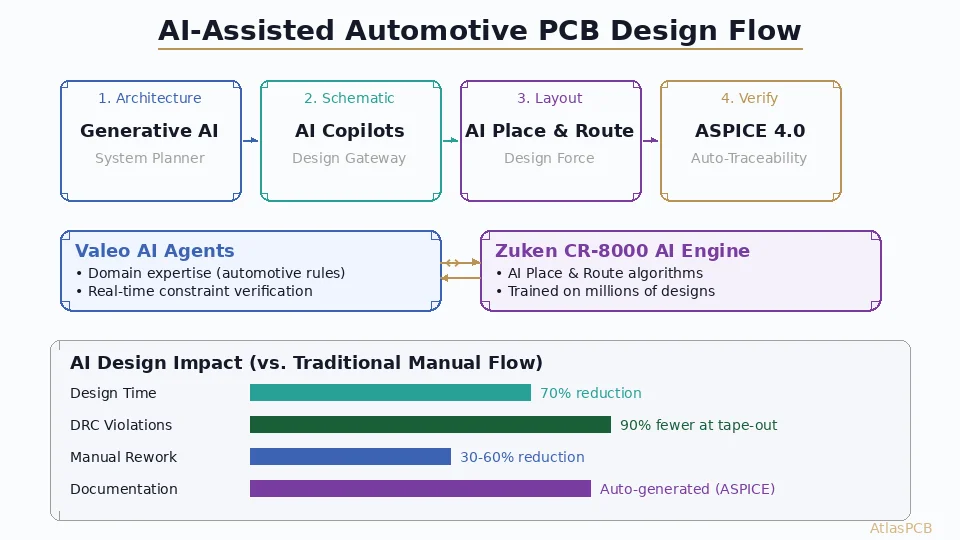
Valeo and Zuken have created the 'Zuken Valeo InnoLab' — an AI-assisted electronic design platform where Valeo's proprietary AI agents collaborate with Zuken's CR-8000 EDA tools (System Planner, Design Gateway, Design Force) in real time. The system uses generative AI for multi-criteria architecture evaluation, AI copilots for hardware rule verification during schematic entry, and AI Place and Route trained on automotive design constraints.
The EDA Industry’s AI Inflection Point
On June 1, 2026, automotive Tier-1 supplier Valeo and Japanese EDA company Zuken announced a strategic partnership that may define how AI transforms PCB design in the automotive sector. Their “Zuken Valeo InnoLab” program doesn’t just add AI features to existing tools — it fundamentally restructures the design flow around human-AI collaboration.
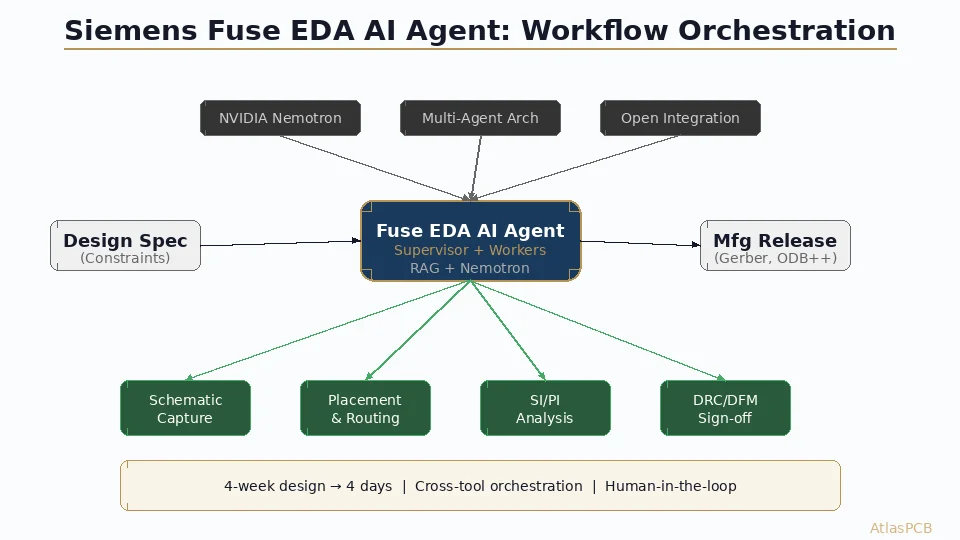
This announcement follows Siemens’ Fuse EDA Agent (May 2026) and Cadence’s Cerebrus expansion into PCB (late 2025), confirming that every major EDA vendor is racing to integrate AI into PCB design workflows. But the Valeo-Zuken approach is distinct: it combines a tool vendor’s AI with a customer’s proprietary AI agents, creating a hybrid intelligence system trained on real automotive design knowledge.
The Four Pillars of AI-Assisted Design
The co-innovation partnership is structured around four distinct stages of the electronic design flow:
1. Functional Generative Design (Architecture)
Tool: Zuken System Planner AI Role: Valeo’s generative AI creates and evaluates multi-criteria architectures
Before any schematic is drawn, the system explores the architecture design space:
- Generate multiple circuit topologies meeting functional requirements
- Evaluate each against Valeo’s internal standards (thermal, EMC, cost, reliability)
- Rank architectures by weighted criteria specific to the application
- Present engineers with a shortlist of optimized starting points
This is analogous to how generative AI in mechanical design explores thousands of structural variants — but applied to electronic system architecture. Instead of an engineer spending days exploring 3–4 topology options, the AI evaluates dozens in minutes.
2. Digital Continuity and Traceability
Tool: Zuken’s integration platform AI Role: Valeo’s AI processes data and reinjects automated actions
Automotive SPICE 4.0 (ASPICE 4.0) requires full traceability from requirements through design to verification. The AI maintains this chain automatically:
- Links every design decision to its originating requirement
- Generates compliance documentation as design progresses
- Flags potential ASPICE violations before they accumulate
- Maintains bidirectional traceability without manual documentation overhead
For automotive electronics where a single PCB might require 500+ pages of design documentation, AI-automated traceability could save weeks of engineering time per project.
3. AI-Assisted Detailed Design (Schematic)
Tool: Zuken Design Gateway AI Role: “Virtual copilots” assist engineers in real time
During schematic capture, AI agents provide:
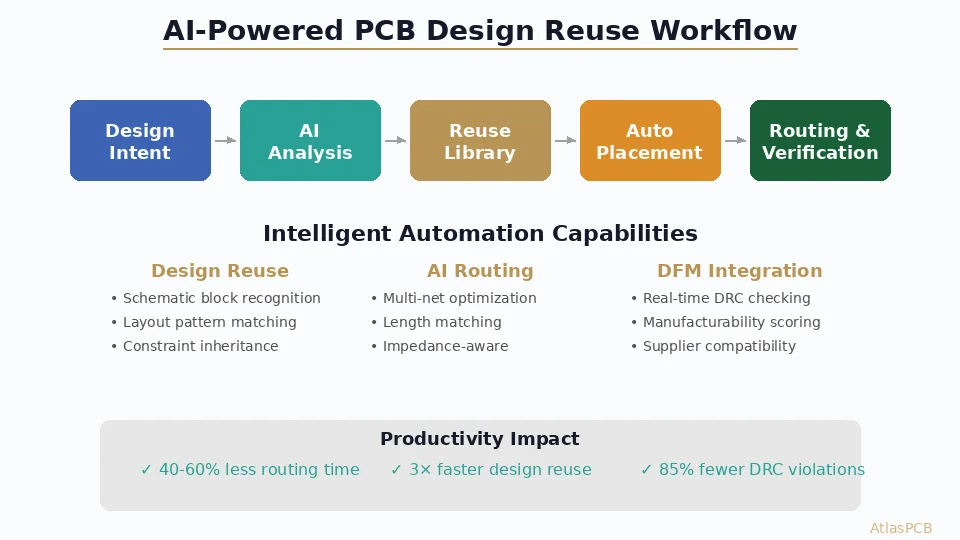
- Solution searches: Suggest component alternatives meeting requirements
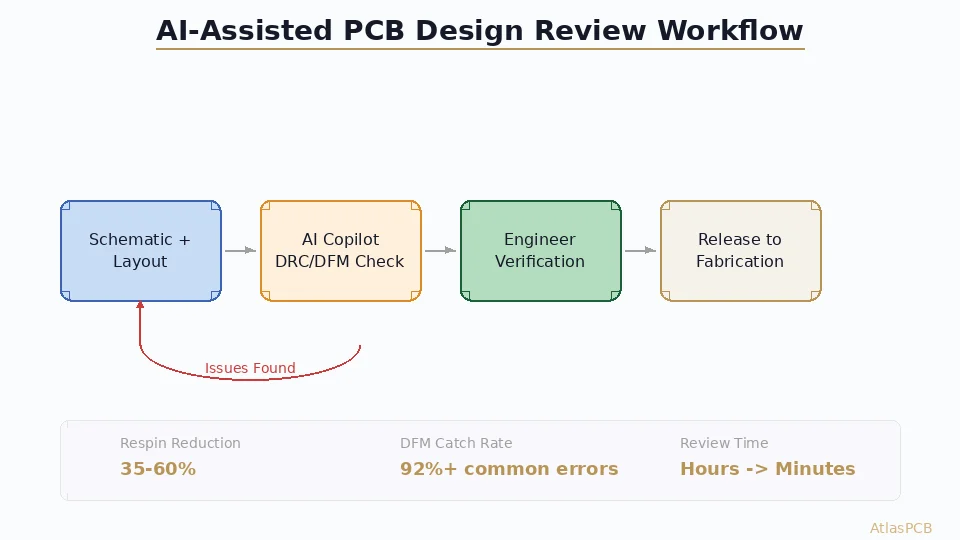
- Hardware rule verification: Check against Valeo’s design rule database in real time (not batch-mode DRC after completion)
- Constraint implementation: Automatically apply net classes, voltage clearances, and current ratings based on context
- Standardized database utilization: Zuken develops AI functions that accelerate schematic entry using Valeo’s component library
The key innovation: rule checking happens during design, not after. Traditional DRC finds violations after hundreds of connections are already made. AI copilots prevent violations from being introduced in the first place.
4. AI Place and Route (Physical Layout)
Tool: Zuken Design Force AI Role: AI-PR algorithms trained on automotive constraints
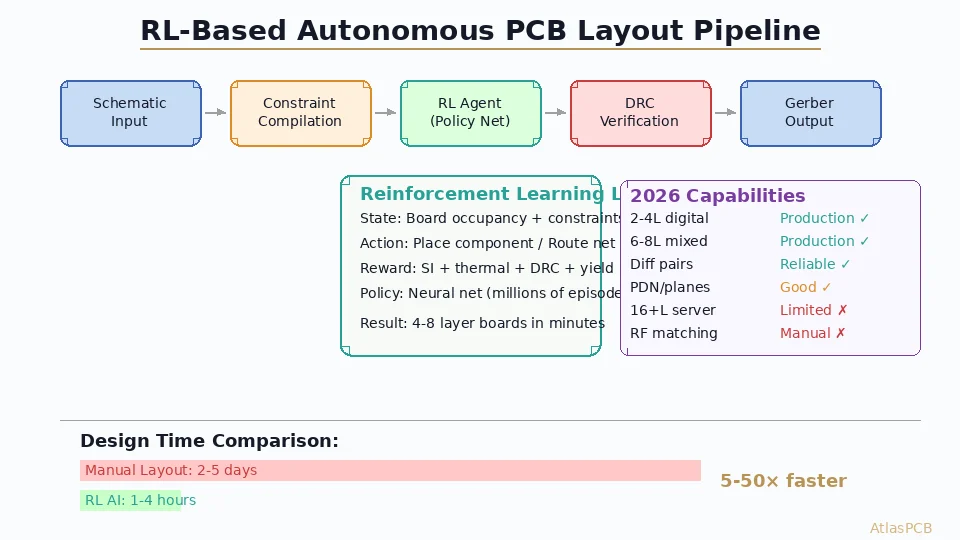
Physical PCB layout is where AI has perhaps the highest impact:
- Placement: AI positions components considering signal integrity, thermal management, manufacturing constraints, and automotive reliability requirements simultaneously
- Routing: AI completes trace routing with awareness of impedance targets, crosstalk budgets, return paths, and DFM rules
- Training on real data: Valeo uses Zuken’s SDK to train the AI on their specific automotive design constraints
Christophe Le Ligné, VP R&D at Valeo, emphasized the partnership’s unique value: “The power of Zuken’s AI roadmap, combined with the exceptional openness of its architecture, allows us to hybridize our own artificial intelligence tools with their engine.”
How This Compares to Other AI-EDA Approaches
| Approach | Vendor | Method | Scope |
|---|---|---|---|
| Valeo-Zuken InnoLab | Zuken + Valeo | Customer AI agents + tool AI | Full flow (arch → layout) |
| Siemens Fuse Agent | Siemens EDA | LLM orchestration of existing tools | Workflow automation |
| Cadence Cerebrus | Cadence | Reinforcement learning for layout | Placement & routing |
| Altium AI | Altium | Copilot suggestions | Component selection, routing hints |
| KiCad + LLM plugins | Community | LLM-driven script generation | Schematic entry |
The Valeo-Zuken model is notable because it’s not just a tool vendor adding AI — it’s a customer contributing proprietary AI that encodes decades of automotive design expertise. This bidirectional approach could set the template for how other automotive OEMs/Tier-1s engage with EDA companies.
Implications for Automotive PCB Manufacturing
The shift toward AI-designed automotive PCBs will impact manufacturing in several ways:
Manufacturing AI-Designed Automotive PCBs
AtlasPCB supports automotive PCB production with ISO 9001 processes, controlled impedance, and full traceability. AI-optimized designs with tighter tolerances — we deliver them.
Get Automotive PCB Quote →More Consistent, Tighter-Tolerance Designs
AI-generated layouts tend to use manufacturing margins more efficiently:
- Trace widths closer to minimum capabilities (because AI verifies DRC compliance continuously)
- Via placement optimized for drilling efficiency
- Component placement that maximizes panelization yield
- Stackup utilization that reduces layer count without compromising performance
Faster Design Cycles → More Prototype Iterations
When design takes days instead of weeks:
- More prototype spins per project
- Tighter qualification timelines
- Faster time-to-market for new automotive platforms
- Increased demand for quick-turn prototype fabrication
Standardized Design Patterns
AI trained on standardized databases produces more uniform designs:
- Common footprint libraries reduce NRE setup time
- Consistent copper weights and stackup structures across product lines
- Predictable manufacturing complexity per design class
- Easier yield optimization when patterns are consistent
The Bigger Picture: AI’s Role in Electronic Hardware
The Valeo-Zuken partnership signals that AI in EDA is moving from “assisted” to “collaborative”:
- Phase 1 (2020–2024): AI as automation — automated DRC, auto-routing improvements
- Phase 2 (2024–2026): AI as assistant — copilots suggesting solutions, answering questions
- Phase 3 (2026+): AI as collaborator — AI agents with domain expertise working alongside engineers in real time
The critical insight from this partnership is that effective AI in EDA requires both:
- Tool-level AI (Zuken’s algorithms, trained on millions of designs)
- Domain-level AI (Valeo’s knowledge of automotive standards, failure modes, and design rules)
Neither alone is sufficient. A general-purpose AI auto-router doesn’t know that automotive EMC requires specific grounding patterns near CAN bus transceivers. Valeo’s domain AI encodes this knowledge and guides the tool AI’s decisions.
What Hardware Engineers Should Do Now
- Evaluate AI readiness of your EDA tools — Does your current tool support AI plugins, APIs, or agent frameworks?
- Document your design rules programmatically — AI agents need machine-readable rules, not PDF guidelines
- Build standardized component libraries — AI works best with consistent, well-characterized parts
- Invest in design data infrastructure — AI training requires historical design data in structured formats
- Start with constrained problems — AI auto-routing of power buses or decoupling cap placement before attempting full-board automation
Internal Links
- Read about Siemens Fuse EDA AI Agent for a complementary approach to AI-driven PCB design
- Explore signal integrity design principles that AI routing tools must respect
- Learn about controlled impedance manufacturing for high-frequency automotive radar PCBs
- Check our capabilities for automotive-grade PCB fabrication
Source: PCB Directory, June 1, 2026. Companies: Valeo, Zuken.
Building automotive PCBs designed with next-generation EDA tools? Request a DFM review — our engineers ensure AI-optimized layouts are manufacturable with the tightest tolerances.
About AtlasPCB — We specialize in complex PCB manufacturing for HDI, RF, and high-reliability applications. Explore our full PCB manufacturing capabilities, or get an instant online quote . Every order includes free engineering review. Get your quote.
Reviewed by AtlasPCB Engineering Team — IPC-certified manufacturing specialists with 15+ years of production experience in HDI, RF, and high-reliability PCB fabrication. Content based on factory floor data and real customer design reviews.
Frequently Asked Questions
What does the Valeo-Zuken AI design platform do?
Can AI fully automate automotive PCB design?
How does AI improve PCB auto-routing quality?
- AI PCB design
- automotive electronics
- Zuken
- Valeo
- EDA automation
- generative design
- auto-routing
- ASPICE