· Priya Nair · Engineering · 4 min read
PCBA Assembly Process
Understand the complete PCB assembly (PCBA) process — solder paste printing, pick and place, reflow soldering, wave soldering, inspection, and functional testing explained step by step.

Quick Answer
PCBA (PCB Assembly) involves mounting electronic components onto bare PCBs through SMT (Surface Mount Technology) and/or through-hole processes. The SMT process includes solder paste application, pick-and-place, reflow soldering, and inspection (AOI, X-ray).
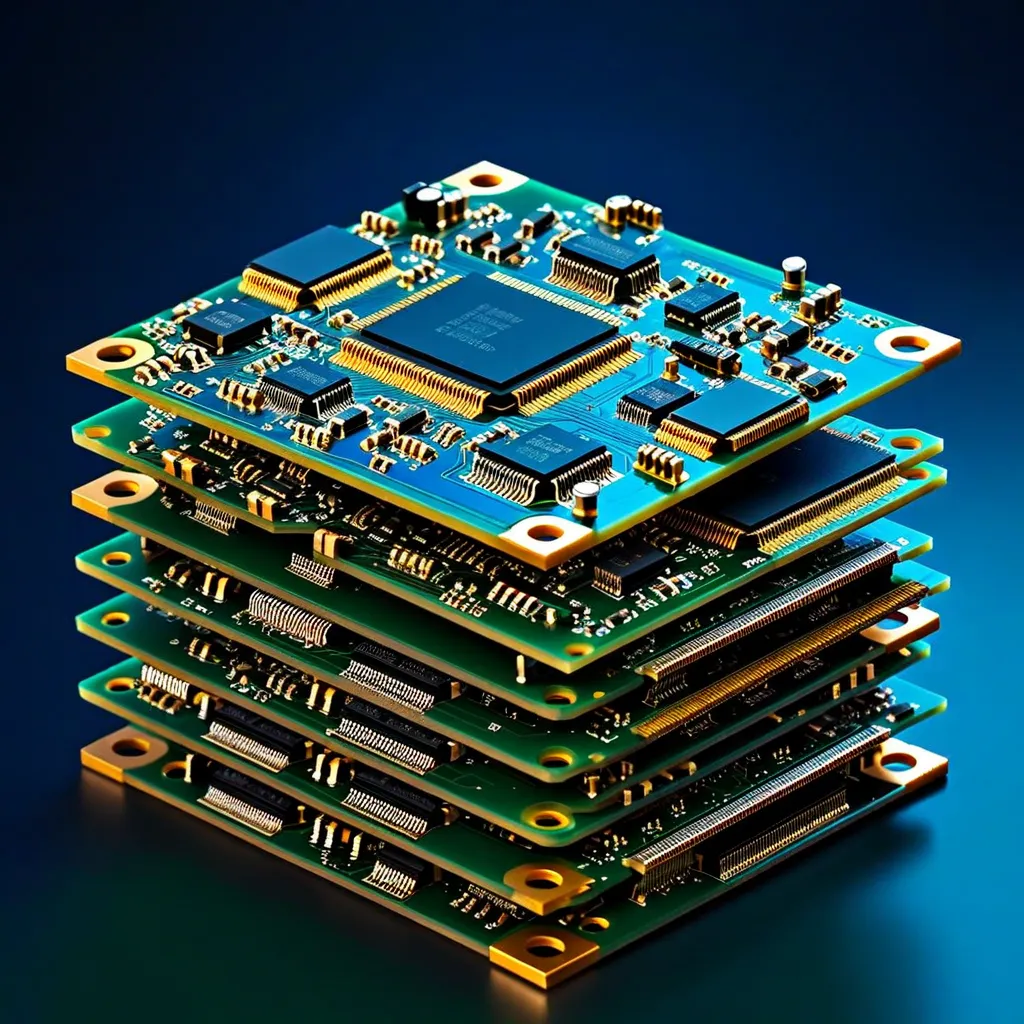
PCB Assembly (PCBA) is the process of soldering electronic components onto a bare PCB to create a functional circuit board. This guide walks through each step of the modern PCBA manufacturing process.
Step 1: Solder Paste Printing
Solder paste — a mixture of tiny solder balls (25-45um diameter) suspended in flux — is deposited onto the PCB pads through a stainless steel stencil.
Process Details
- Stencil: Laser-cut stainless steel sheet (typically 0.10-0.15mm thick) with apertures matching pad locations
- Printer: Automated screen printer aligns the stencil to the board using fiducial marks
- Squeegee: Metal or polyurethane blade pushes paste across the stencil at controlled speed and pressure
- Paste volume: Critical parameter — too little causes insufficient solder, too much causes bridging
Key Parameters
| Parameter | Typical Value |
|---|---|
| Stencil thickness | 0.10mm (fine-pitch), 0.12mm (standard), 0.15mm (large pads) |
| Squeegee speed | 25-75mm/s |
| Squeegee pressure | 3-8 kg |
| Print accuracy | +/-0.025mm |
| Cycle time | 15-30 seconds/board |
Solder Paste Inspection (SPI)
After printing, 3D SPI systems measure paste volume, height, and area on every pad. This catches ~60% of all assembly defects at the earliest possible stage.
Step 2: Component Placement (Pick and Place)
Automated pick-and-place machines place SMD components onto the solder paste with extreme precision.
Machine Types
- Chip shooter: High-speed placement of small passives (resistors, capacitors). Speed: 40,000-80,000 CPH.
- Fine-pitch placer: Precision placement of ICs, BGAs, QFPs. Speed: 10,000-30,000 CPH. Accuracy: +/-0.025mm.
- Multi-function: Modern machines combine both capabilities.
Process
- Component feeders (tape reels, trays, tubes) supply components
- Vacuum nozzle picks up component from feeder
- Vision system inspects component and calculates offset correction
- Component placed on PCB at programmed coordinates with corrected alignment
- Paste tackiness holds component in position until reflow
Component Placement Sequence
- Smallest components first (0201, 0402 passives)
- Medium components (SOIC, SOT, QFP)
- Large/heavy components last (BGA, connectors, shields)
- This prevents nozzle interference and ensures stable placement
Step 3: Reflow Soldering
The board passes through a reflow oven where controlled heat melts the solder paste and forms permanent solder joints.
Reflow Profile Zones
- Preheat (25°C → 150°C): Gradual ramp at 1-3°C/second. Activates flux and drives off solvents.
- Soak/Thermal soak (150°C → 200°C): 60-120 seconds at near-constant temperature. Equalizes temperature across the board.
- Reflow (peak 235-250°C): Solder melts and wets the pads. Time above liquidus: 30-90 seconds.
- Cooling (250°C → 25°C): Controlled cooling at 2-4°C/second. Forms strong crystalline solder joints.
Lead-Free vs Leaded
| Parameter | SnPb (Leaded) | SAC305 (Lead-Free) |
|---|---|---|
| Melting point | 183°C | 217°C |
| Peak temp | 220-235°C | 240-250°C |
| Time above liquidus | 45-75s | 30-60s |
| Wetting | Excellent | Good |
Step 4: Through-Hole Assembly (If Required)
For boards with through-hole components (connectors, transformers, large capacitors):
Wave Soldering
- Flux application (spray or foam fluxer)
- Preheat (100-130°C)
- Board bottom passes over a wave of molten solder (250-260°C)
- Solder wicks up through the holes and forms joints
Selective Soldering
- Programmable solder nozzle applies solder only to specific through-hole joints
- Avoids disturbing previously soldered SMD components on the bottom side
- Slower but more precise than wave soldering
- Preferred for mixed-technology boards
Step 5: Inspection
AOI (Automated Optical Inspection)
- High-resolution cameras photograph every component and solder joint
- Software compares against programmed references
- Catches: missing parts, wrong orientation, misalignment, solder bridges, insufficient solder
- Placed after reflow and/or after wave soldering
X-Ray Inspection
- Required for BGA, QFN, and other bottom-terminated components
- Reveals: solder ball voiding, bridging, head-in-pillow defects
- 2D X-ray for screening, 3D CT for detailed analysis
Manual Visual Inspection
- Trained inspectors check areas AOI can’t reach
- Final visual quality check before packaging
- Uses magnification (10-40x) and good lighting
Step 6: Testing
ICT (In-Circuit Test)
- Bed-of-nails fixture tests component values and connections
- Catches: wrong values, missing components, opens, shorts
- Speed: 10-30 seconds per board
Functional Test (FCT)
- Board is powered and tested for correct operation
- Verifies: power rails, communication interfaces, sensor readings, LED indicators
- Custom test software and hardware for each product
Programming
- Microcontrollers and FPGAs are programmed via JTAG, SWD, UART, or custom interfaces
- Can be done during FCT or as a separate step
- Production programming typically uses gang programmers for speed
Step 7: Conformal Coating (Optional)
For products operating in harsh environments:
- Acrylic, silicone, urethane, or parylene coating applied to protect against moisture, dust, chemicals
- Applied by spray, dip, or selective coating robot
- Typical thickness: 25-75um
Step 8: Final Assembly and Packaging
- Depanelization (V-score breaking or router)
- Visual inspection of finished boards
- ESD-safe packaging (anti-static bags, foam)
- Labeling (serial numbers, date codes, compliance marks)
- Vacuum sealing with desiccant for moisture-sensitive products
PCBA Turnaround Times
| Service Level | Typical Lead Time |
|---|---|
| Quick-turn prototype | 24-72 hours |
| Standard prototype | 5-7 business days |
| Production (small batch) | 2-3 weeks |
| Production (mass) | 3-5 weeks |
Conclusion
PCBA is a precise, multi-step process where quality at each stage determines the reliability of the final product. Understanding the process helps designers create assembly-friendly layouts (DFA), specify appropriate quality levels, and communicate effectively with their assembly partner. Whether you need a 5-piece prototype or 100,000-unit production run, the fundamental process steps remain the same — only the level of automation and testing scales with volume.
Further Reading
[PCB Manufacturing Process: 15 Steps from Gerber to Finished Board]/blog/pcb-manufacturing-process-15-steps/)
[IPC Class 3 Requirements: The Complete Guide for Designers]/blog/ipc-class-3-requirements/)
About AtlasPCB — We specialize in complex PCB manufacturing for HDI, RF, and high-reliability applications. Explore our PCB assembly services . Every order includes free engineering review. Get your quote.
Reviewed by AtlasPCB Engineering Team — IPC-certified manufacturing specialists with 15+ years of production experience in HDI, RF, and high-reliability PCB fabrication. Content based on factory floor data and real customer design reviews.
Frequently Asked Questions
What is the PCBA manufacturing process?
What is the difference between SMT and through-hole?
- pcb assembly
- PCBA
- reflow soldering
- pick and place