· Marcus Lin · News · 8 min read
New Ultra-Low-Loss PCB Laminates Target Sub-6 GHz
Material manufacturers are releasing next-generation ultra-low-loss laminates with Df below 0.002 at 10 GHz, reshaping the competitive landscape for 5G base station and phased array antenna PCB fabrication.
Quick Answer
Leading laminate manufacturers including Isola, Panasonic, and Rogers are releasing ultra-low-loss materials with Df values below 0.002 at 10 GHz for 5G infrastructure. These materials enable lower insertion loss in sub-6 GHz massive MIMO antennas and mmWave phased arrays, while new formulations improve manufacturability with standard PCB processes.
New Ultra-Low-Loss PCB Laminates Target Sub-6 GHz and mmWave 5G Applications
The global 5G infrastructure buildout has entered its most material-intensive phase. With over 4 million 5G base stations deployed worldwide by early 2026 — and projections from the GSMA calling for 7.5 million by 2028 — the demand for high-performance PCB laminates is straining supply chains and driving a fierce innovation cycle among material manufacturers.
At the center of this cycle: a new generation of ultra-low-loss laminates engineered to push dissipation factor (Df) below 0.002 at 10 GHz while maintaining the processability and thermal reliability that volume PCB fabrication demands.
The 5G Material Challenge
5G networks operate across two distinct frequency regimes, each imposing different PCB material requirements:
Sub-6 GHz massive MIMO systems (typically 3.3–4.9 GHz for n77/n78 bands) use antenna arrays with 32 to 64 elements per panel, each requiring carefully controlled feed networks etched into multilayer PCBs. At these frequencies, dielectric loss is a meaningful but not dominant contributor to total system loss. The primary material challenges are [Dk stability across temperature]/blog/high-frequency-pcb-substrate-selection-dk-df/) (for beam steering accuracy), coefficient of thermal expansion (CTE) matching to components, and processability in high-layer-count builds.
mmWave systems (24–48 GHz for n257, n258, n260, and n261 bands) operate where dielectric loss becomes the primary limiting factor. At 28 GHz, even materials classified as “low-loss” (Df ≈ 0.004 at 10 GHz) introduce 0.8–1.0 dB/inch of dielectric loss on stripline layers. For a phased array antenna PCB where feed network traces may run 3–5 inches, this loss directly reduces effective isotropic radiated power (EIRP) and receiver sensitivity.
The industry needs materials that minimize loss at both frequency regimes while remaining compatible with volume PCB manufacturing processes — not hand-processed PTFE specialty boards, but materials that can run on standard multilayer press, drill, and plate lines.
The New Material Landscape
2025 and 2026 have seen a burst of product launches and upgrades from the three dominant suppliers:
Panasonic Electronic Materials
Panasonic’s Megtron series has long been the benchmark for high-speed digital applications, and the company has extended its reach into RF territory:
Megtron 7 (R-5785N): Dk ≈ 3.3, Df ≈ 0.002 at 10 GHz. Originally positioned for 112G SerDes and PCIe 6.0, Megtron 7 is increasingly specified for sub-6 GHz antenna feed networks where its combination of ultra-low loss and excellent high-layer-count processability offers a compelling value proposition.
Megtron 8 (announced late 2025): Targeting Df below 0.0015 at 10 GHz with improved Dk uniformity (±2% across the panel). Early sampling suggests this material could challenge PTFE-based systems in mmWave applications while retaining thermoset resin processing compatibility.
Isola Group
Isola has aggressively expanded its high-frequency portfolio:
Astra MT77: Dk ≈ 3.0, Df ≈ 0.0017 at 10 GHz. Designed explicitly for 5G massive MIMO antenna arrays, Astra MT77 combines PTFE-like electrical performance with modified epoxy processability. It accepts standard desmear chemistry and plating processes, eliminating the sodium naphthenide etch-back required by pure PTFE.
Tachyon 100G: Dk ≈ 3.02, Df ≈ 0.0021 at 10 GHz. Positioned for both high-speed digital (PCIe 6.0, 112G Ethernet) and RF applications, providing a single-material solution for boards that combine digital backplane routing with integrated antenna elements.
I-Tera MT40 (2026 refresh): Dk ≈ 3.45, Df ≈ 0.0031 at 10 GHz. The refreshed formulation improves thermal performance (Td > 400°C) while maintaining mid-range pricing, targeting the high-volume sub-6 GHz market where cost sensitivity is acute.
Rogers Corporation
Rogers, the traditional leader in RF laminate materials, has responded to the competitive pressure from thermoset-based alternatives:
RO4835T: Dk ≈ 3.33, Df ≈ 0.0030 at 10 GHz. A spread-glass-reinforced thermoset designed for hybrid builds where Rogers PTFE layers are combined with FR-4-processable materials. Eliminates the need for separate lamination cycles.
RO3003G2 (2025 launch): Dk ≈ 3.0, Df ≈ 0.0013 at 10 GHz. A ceramic-filled PTFE targeting mmWave phased arrays, offering the lowest Df in the market but requiring specialized processing.
MAGTREX 100: Dk ≈ 3.0, Df ≈ 0.0020 at 10 GHz. Rogers’ answer to Megtron 7 and Astra MT77 — a non-PTFE, thermally robust material designed for standard multilayer processing.
For a comprehensive comparison of these material families, our [RF PCB materials comparison guide]/blog/rf-pcb-materials-comparison/) provides detailed property tables and application guidance.
Manufacturing Process Implications
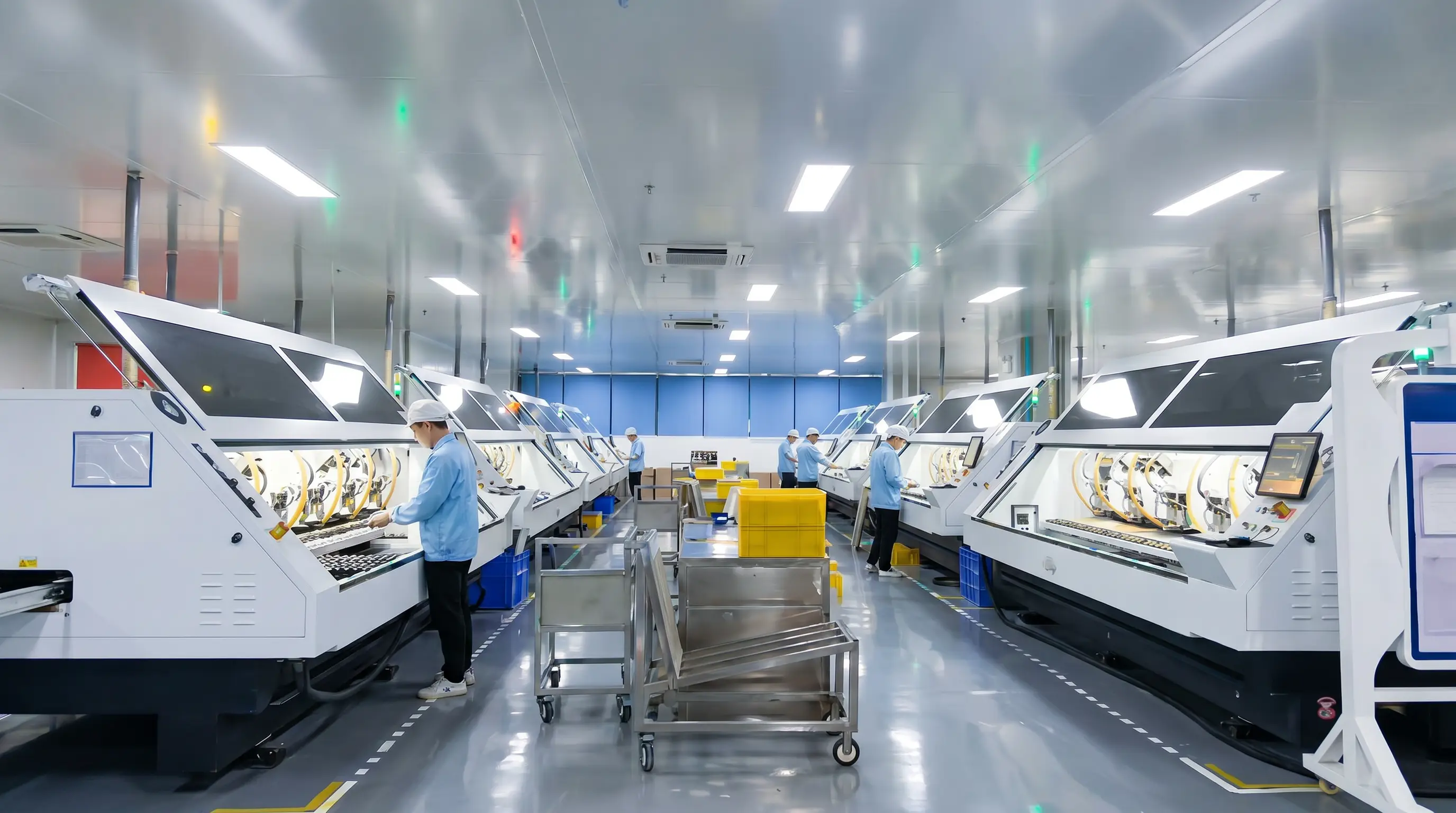
The shift to ultra-low-loss materials is not simply a matter of swapping laminates on existing production lines. Each material family introduces process considerations that PCB fabricators must accommodate:
Drilling. Ultra-low-loss materials often use modified resin systems (PTFE-modified or ceramic-filled) that behave differently under mechanical drilling. Entry and backup materials must be matched to the laminate to prevent delamination, and drill hit counts are typically reduced by 30–50% compared to standard FR-4. Laser drilling parameters for microvias require material-specific optimization of pulse energy and repetition rate.
Desmear and plating. Pure PTFE materials require plasma or sodium naphthenide desmear, adding cost and process steps. The newest thermoset-based ultra-low-loss materials (Megtron 7/8, Astra MT77, MAGTREX 100) accept permanganate desmear with modified chemistry — a significant manufacturing advantage. Electroless copper adhesion to low-Df resin systems requires careful surface preparation; some fabricators are adopting plasma-assisted surface activation as a standard step for these materials.
Lamination. Fill and flow characteristics of ultra-low-loss prepregs differ from standard FR-4. Low-flow formulations are common to maintain precise dielectric thickness control — critical for impedance-sensitive [RF microwave PCB designs]/blog/rf-microwave-pcb-design/). Lamination profiles (temperature ramp, pressure, and dwell time) must be developed for each material system.
Soldermask and surface finish. Some ultra-low-loss materials have lower surface energy than standard FR-4, affecting soldermask adhesion. ENIG, ENEPIG, and immersion silver surface finishes may require process adjustments for adequate adhesion and solderability on these substrates.
Hybrid Stackup Strategies
For most 5G PCB applications, cost optimization demands a hybrid approach: ultra-low-loss materials on RF signal layers, paired with lower-cost materials on digital and power distribution layers.
A typical 5G massive MIMO antenna board might use:
- Layers 1–2: Astra MT77 or Megtron 7 (antenna element and feed network)
- Layers 3–4: Mid-loss material like I-Tera MT40 (digital control signals)
- Layers 5–6: Standard FR-4 equivalent (power distribution and ground planes)
This approach reduces material cost by 30–40% compared to an all-ultra-low-loss build while maintaining RF performance on critical layers. However, hybrid stackups introduce CTE mismatch challenges that must be managed through careful prepreg selection and lamination profile design to prevent warpage and delamination.
The Dk Stability Challenge
For phased array antennas — whether massive MIMO at sub-6 GHz or mmWave beamforming systems — Dk stability is arguably more important than absolute Df value. Phased arrays depend on precise phase relationships between antenna elements; any Dk variation translates directly to phase error, which degrades beam pointing accuracy and sidelobe levels.
Two types of Dk variation matter:
Spatial variation across the panel area. Standard woven-glass reinforcement creates systematic Dk non-uniformity due to the resin-rich and glass-rich regions of the weave pattern. For phased arrays with element spacings of 30–40 mm (sub-6 GHz) or 4–5 mm (mmWave), this variation can cause element-to-element phase errors exceeding 5°. Spread glass and non-woven glass reinforcements reduce spatial Dk variation to below ±1.5%.
Thermal variation across the operating temperature range (typically −40°C to +85°C for outdoor base stations). Temperature coefficient of Dk (TCDk) values below 50 ppm/°C are required for phased array applications; the newest ultra-low-loss materials achieve 30–40 ppm/°C, comparable to ceramic-filled PTFE.
Market Dynamics and Supply Chain
The 5G laminate market is projected to reach $2.8 billion by 2028 (Prismark estimates), growing at approximately 15% CAGR from 2025. This growth is attracting investment:
- Panasonic has expanded Megtron production capacity at its Ayase, Japan facility and qualified a second production line at its facility in Suzhou, China.
- Isola has invested in capacity at its Chandler, Arizona facility and its Düren, Germany plant, providing dual-geography supply security.
- Rogers expanded its Chandler, Arizona advanced materials line and continues to serve from its facilities in Belgium and China.
- Shengyi Technology (SYTECH), China’s largest domestic laminate producer, has launched its S7439 series (Df ≈ 0.002 at 10 GHz) targeting the domestic 5G market and is beginning to penetrate international supply chains.
For PCB buyers, the expanding supplier base is positive news — both for pricing competition and supply security. However, qualifying a new laminate in an RF application requires 6–12 months of electrical characterization and reliability testing, so strategic material decisions for 2027 designs should be made now.
What This Means for 5G PCB Design
The convergence of 5G deployment volumes and ultra-low-loss material innovation creates both opportunity and complexity:
- Material selection is now a first-order design decision. Choosing between Megtron 7, Astra MT77, and competing alternatives affects not just RF performance but manufacturing process, supply chain, and cost.
- Hybrid stackups require careful engineering. The cost benefits of mixing material systems must be balanced against CTE management and manufacturing complexity.
- Fabricator capability matters more than ever. Not all PCB manufacturers can process ultra-low-loss materials reliably. Qualifying a fabricator’s material-specific processes — drilling, desmear, plating adhesion — is essential.
At Atlas PCB, we maintain qualified processes for all major ultra-low-loss material systems and work with design teams to optimize stackup configurations that balance RF performance with manufacturability and cost.
Ready to start your project? Upload your Gerbers for a free engineering review, or talk to an engineer about your design requirements.
About AtlasPCB — We specialize in complex PCB manufacturing for HDI, RF, and high-reliability applications. Explore our RF and high-frequency PCB services, or get an Megtron 6 & 7 low-loss PCB manufacturing . Every order includes free engineering review. Get your quote.
Reviewed by AtlasPCB Engineering Team — IPC-certified manufacturing specialists with 15+ years of production experience in HDI, RF, and high-reliability PCB fabrication. Content based on factory floor data and real customer design reviews.
Frequently Asked Questions
What Df values do new ultra-low-loss laminates achieve?
How do ultra-low-loss laminates affect 5G PCB manufacturing?
Which 5G applications benefit most from ultra-low-loss PCB materials?
- industry-news
- 5g
- ultra-low-loss
- laminate-materials
- rf-pcb